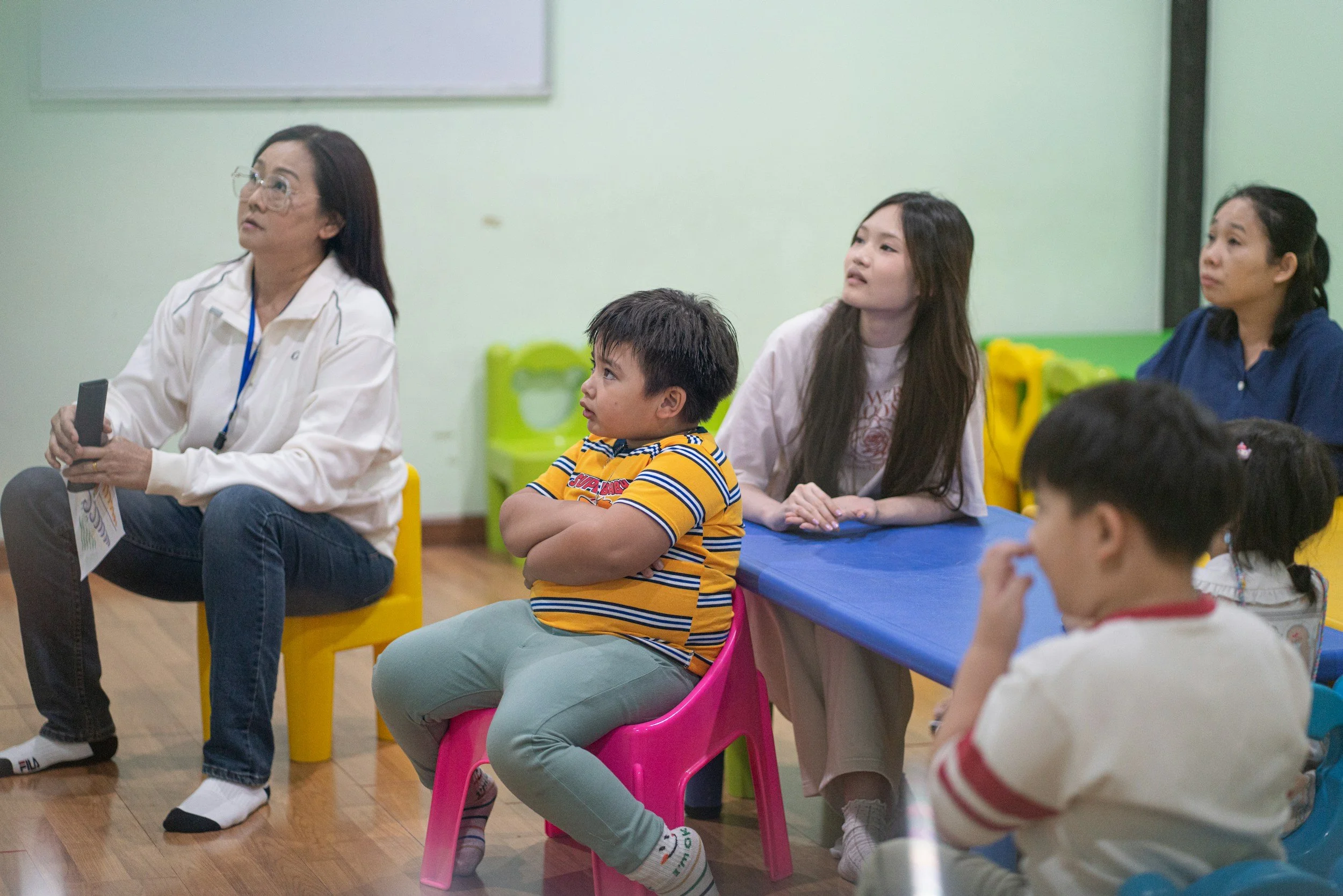
Have you ever watched your child cover their ears at a birthday party, refuse to wear a certain jumper because it "feels wrong", or crash into the sofa again and again as though they simply cannot sit still? For many parents across Dubai, these everyday moments can feel puzzling and, at times, exhausting. What looks like fussiness or boundless energy is often something more meaningful: a child working hard to make sense of a world that feels overwhelming, confusing, or strangely muted.
This experience has a name, sensory processing, and understanding it can transform the way families support their children. With the right guidance, particularly through occupational therapy, children who struggle to process sensory information can learn to feel calmer, more comfortable, and far more ready to play, learn, and connect.
Every second of the day, our brains receive a flood of information from our senses. Beyond the familiar five, children also rely on two lesser-known systems: the vestibular sense, which governs balance and movement, and the proprioceptive sense, which tells the body where it is in space. A well-regulated nervous system filters and organises all of this automatically, allowing a child to focus on what matters.
For some children, however, this filtering does not work smoothly. They may be over-responsive, finding ordinary sounds, textures, or lights genuinely distressing, or under-responsive, seeming not to notice sensations and therefore seeking out intense movement and pressure. Many children show a mix of both. None of this reflects poor behaviour or poor parenting. It is simply a different way of experiencing the world, and it can be supported beautifully.
Sensory difficulties show up differently in every child, but some patterns are common. You might notice strong reactions to clothing labels, seams, or particular fabrics, or distress at everyday sounds such as hand dryers, blenders, or busy shopping centres. Some children are extremely fussy eaters, avoiding foods of certain textures, while others crave constant movement, spinning, jumping, and climbing well beyond what seems usual.
On the quieter end, a child may appear clumsy, bump into furniture, or seem unaware when they have hurt themselves. Difficulty settling to sleep, becoming overwhelmed in crowded places, or melting down after a seemingly ordinary day can all point towards a nervous system that is working overtime. If several of these resonate, it may be worth exploring further with a professional.
Occupational therapy is, at its heart, about helping children take part fully in the everyday "occupations" of childhood: playing, dressing, eating, learning, and making friends. A paediatric occupational therapist begins by carefully assessing how a child processes sensory information and where the challenges lie.
From there, therapy is built around sensory integration, a playful, evidence-informed approach that gradually helps the brain organise and respond to sensation more comfortably. Sessions often look like joyful play, swinging, climbing, squeezing into tunnels, or working with textured materials, but each activity is chosen with purpose. Over time, this helps a child tolerate a wider range of experiences, improve coordination and focus, and feel more in control of their own body.
Just as importantly, occupational therapy supports the whole family. Parents learn practical strategies to bring calm to mealtimes, mornings, and bedtimes, turning daily struggles into moments of connection.
While professional support makes the biggest difference, there is much families can do day to day. Creating a quiet, low-stimulation corner gives an over-responsive child somewhere to retreat when the world feels too much. Offering heavy work activities, such as carrying the shopping, pushing a laundry basket, or animal walks across the living room, provides the deep pressure that many children find deeply calming.
Predictable routines and gentle warnings before transitions help reduce anxiety, while letting a child who craves movement bounce, swing, or jump before a task that requires sitting still can work wonders. The aim is never to remove every challenge, but to help children feel regulated enough to take part. Every child is different, so a therapist can help tailor these ideas to your own family.
Reaching out for help is a sign of strength, not concern. In Al Jaddaf and across Dubai, families have access to experienced occupational therapists who understand sensory processing deeply and who work in warm partnership with parents. An assessment is simply an opportunity to understand your child better and to build a plan that plays to their strengths.
If daily routines have become a source of stress, or you sense your child is struggling more than they should, an early conversation can open the door to real, lasting change for the whole family.
Is sensory processing difficulty the same as autism?
No, although the two can overlap. Many autistic children experience sensory differences, but plenty of children with sensory processing challenges are not autistic. An assessment helps clarify what is happening for your individual child.
At what age can occupational therapy help?
Occupational therapy can support children from the toddler years right through to adolescence. The earlier sensory challenges are addressed, the more naturally new skills tend to develop, though meaningful progress is possible at any age.
Will my child grow out of it on their own?
Some children develop coping strategies naturally, but many benefit greatly from structured support. Therapy helps build skills more smoothly and reduces the frustration that sensory struggles can cause day to day.
What happens during an occupational therapy session?
Sessions usually look like purposeful play, swinging, climbing, balancing, and exploring different textures, all carefully designed to help the nervous system process sensation more comfortably over time.
How can I tell if my child needs an assessment?
If sensory reactions are interfering with sleep, eating, learning, or family life, or you simply feel something is harder than it should be, a professional assessment can offer clarity and a way forward.
If your child finds the world a little too loud, too bright, or too overwhelming, please know that support is close at hand and that calmer, happier days are absolutely possible. Our warm, experienced team is here to understand your child and to walk alongside your family every step of the way.
To arrange a friendly conversation or book an assessment, contact us on +971 52 600 4107 or bloom@bloombeyond.me, or visit us at 601, 602 and 701 Al Nastaran Tower, Al Jaddaf Waterfront, Dubai. Every child deserves the chance to bloom, and the right support can help them get there.



.png)

.png)

.png)
.png)
.png)
.png)