Most parents have heard of dyslexia, but far fewer are familiar with its mathematical counterpart. Dyscalculia is a specific learning difficulty that affects a child's ability to understand numbers and mathematical concepts — and it is thought to affect around one in twenty children, which means there is likely a child with dyscalculia in almost every classroom in Dubai. Because it is less widely recognised than dyslexia, children with dyscalculia are often mislabelled as careless, lazy or simply "not a maths person". The truth is very different, and with the right support these children can thrive. This guide explains what dyscalculia is, the signs to look for at different ages, and how families across the UAE can access assessment and support.
Dyscalculia is a specific learning difficulty that affects the brain's ability to process numerical information. It is not caused by low intelligence, poor teaching or lack of effort. Children with dyscalculia often have real difficulty with number sense — the intuitive understanding of quantities that most of us take for granted, such as instantly seeing that five sweets are more than three without counting.
A helpful way to think about it: just as dyslexia makes it hard for a capable child to decode written words, dyscalculia makes it hard for a capable child to grasp quantities, remember number facts and follow the steps of a calculation. The child may be articulate, imaginative and strong in other subjects, which is precisely why their struggle with maths can be so confusing for parents and teachers.
In the early years, a child may struggle to count objects accurately, skip numbers when counting aloud, find it hard to recognise small quantities without counting, or show little interest in games involving numbers, sorting or patterns.
In primary school, warning signs become clearer. A child might rely on finger-counting long after classmates have moved on, struggle to remember basic number facts such as simple additions and times tables no matter how often they practise, confuse mathematical symbols, find it difficult to tell the time on an analogue clock, or become anxious and tearful when homework involves maths.
In older children, dyscalculia often shows up as difficulty estimating costs and handling money, trouble judging time and planning ahead, avoidance of any task involving numbers, and a deep-rooted belief that they are "stupid" — despite clear ability in other areas.
It is worth remembering that every child develops at their own pace, and occasional difficulty with maths is normal. The key indicators are persistence and inconsistency: difficulties that do not improve with practice, in a child who is clearly capable in other areas of learning.
The two often travel together, and they can look similar from the outside. Maths anxiety is an emotional response — a fear of maths that can affect any child, including very able mathematicians — while dyscalculia is a cognitive difference in how the brain processes number. A child with dyscalculia frequently develops maths anxiety after repeated experiences of failure, which then makes performance even worse.
This is one of the reasons a proper assessment matters. Untangling what is anxiety, what is a learning difficulty, and what might be something else entirely — such as attention difficulties or a language-based problem with word questions — requires a skilled professional, not guesswork.
A comprehensive assessment usually involves a clinical psychologist or educational assessment specialist. The process typically includes a detailed developmental and school history, standardised tests of general cognitive ability, specific tests of numerical processing and mathematical achievement, and screening for co-occurring difficulties such as ADHD, dyslexia and anxiety, which frequently overlap with dyscalculia.
The result is not just a label. A good assessment produces a clear profile of your child's strengths and difficulties, along with practical recommendations for school and home. In Dubai, this documentation also helps families request exam accommodations and individualised support through their child's school, in line with the UAE's inclusive education framework.
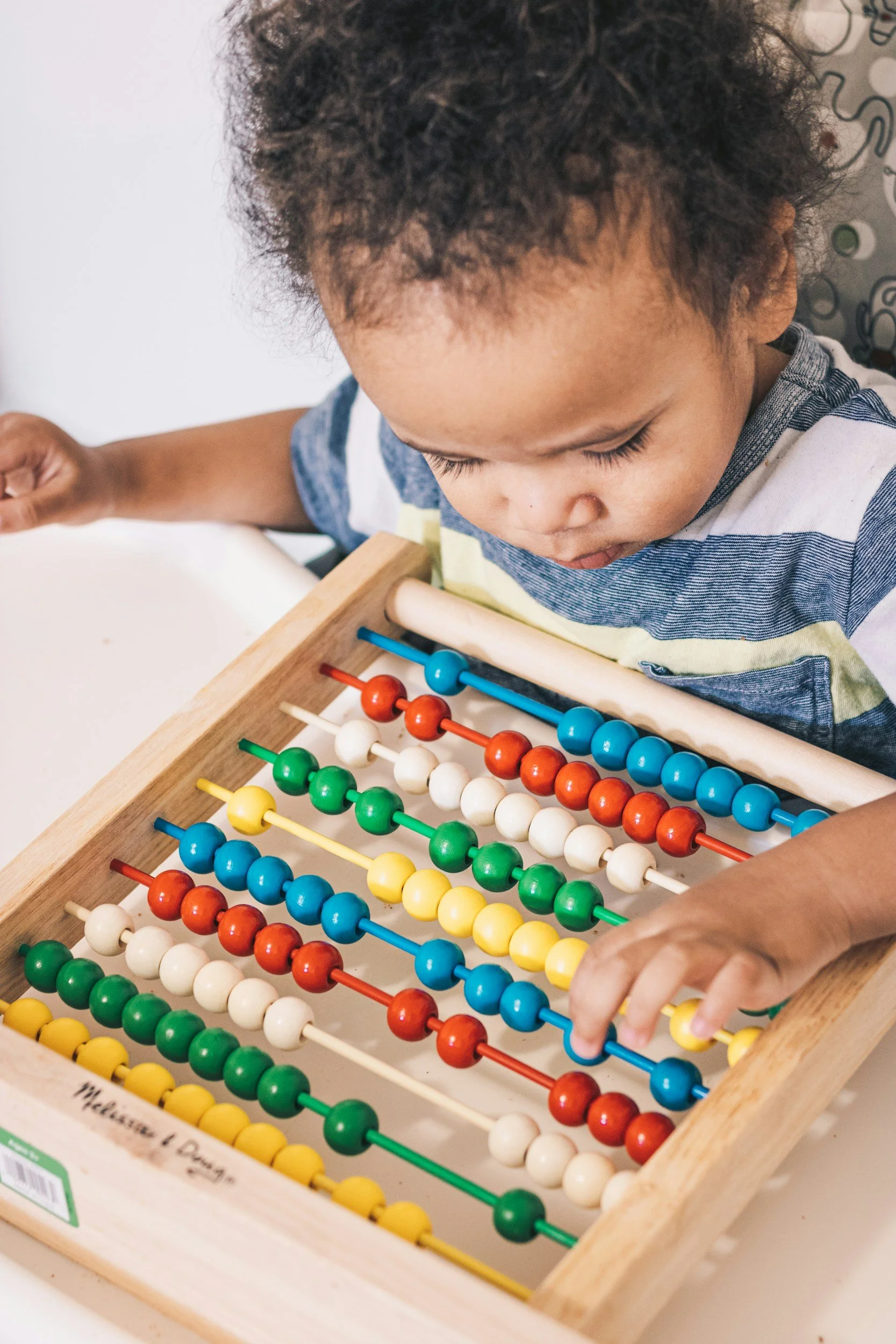
The encouraging news is that targeted support makes a real difference. Effective intervention is typically multisensory and systematic: children build number sense using concrete materials — counters, blocks, number lines — before moving to pictures and finally to abstract symbols. Skills are broken into small steps, revisited often, and taught to mastery rather than rushed.
At home, parents can help by weaving numbers gently into daily life around Dubai: letting your child handle dirhams at the supermarket, halving quantities together while cooking, playing board games with dice, and talking about time and distances on familiar journeys. Just as important is protecting your child's confidence — praise effort and strategy rather than speed, and never let maths become a battleground.
Where difficulties are part of a broader picture, a multidisciplinary team can help. Some children benefit from occupational therapy for working memory and organisational strategies, support from a psychologist for anxiety and self-esteem, or coordinated planning with the school's inclusion team. Centres in Al Jaddaf and across Dubai increasingly offer this joined-up approach under one roof.
Is dyscalculia just "being bad at maths"?
No. Many children find maths hard for many reasons. Dyscalculia is a specific, persistent difficulty with processing number itself, present even with good teaching and genuine effort, in a child who is capable in other areas.
Can dyscalculia be cured?
Dyscalculia is a lifelong difference in how the brain processes numbers, but its impact can be greatly reduced. With structured, multisensory intervention and sensible accommodations, children learn strategies that let them succeed at school and in daily life.
At what age can my child be assessed in Dubai?
Formal diagnosis is usually most reliable from around age six or seven, once formal maths instruction has begun. However, if you have concerns earlier, a developmental consultation is still valuable — early support for number sense never hurts.
Does dyscalculia occur with other conditions?
Yes, frequently. Research suggests a large proportion of children with dyscalculia also have dyslexia, ADHD or both. This is why thorough assessment, rather than a quick screening, gives the most useful picture.
Will my child still manage subjects like science and economics later on?
With the right strategies and accommodations — extra time, formula sheets, calculator use where permitted — many students with dyscalculia go on to succeed in secondary school and university, including in subjects that involve numbers.
If numbers have become a source of tears and frustration in your home, you do not have to navigate it alone. Our experienced team offers comprehensive assessments and compassionate, evidence-based support for children with learning difficulties. Contact us on +971 52 600 4107, email bloom@bloombeyond.me, or visit us at 601, 602 & 701 Al Nastaran Tower, Al Jaddaf Waterfront, Dubai.



.png)

.png)

.png)
.png)
.png)
.png)