For many parents in Dubai, receiving an autism diagnosis for their child brings a mixture of emotions: relief at finally having answers, and uncertainty about what comes next. One of the most frequently recommended interventions is Applied Behaviour Analysis (ABA), a structured, evidence-based approach that has helped countless children develop communication, social, and daily living skills. If you are exploring therapy options for your child in Dubai or the wider UAE, understanding how ABA works — and what a quality programme looks like — is an important first step.
Applied Behaviour Analysis is a scientific approach to understanding behaviour and how it is affected by the environment. Rather than a single technique, ABA is a framework built on decades of research into how children learn. Therapists break down complex skills — such as asking for help, taking turns, or getting dressed — into small, teachable steps, and use positive reinforcement to encourage progress.
Every child's programme begins with a thorough assessment. A Board Certified Behaviour Analyst (BCBA) observes the child, speaks with the family, and identifies both strengths and areas of need. From there, an individualised plan is created with clear, measurable goals. Progress is recorded at every session, which means parents can see exactly how their child is developing over time.
Research consistently shows that the earlier a child begins therapy, the better the long-term outcomes tend to be. The first years of life are a period of remarkable brain plasticity, when new skills and neural connections form most readily. Early intervention does not mean a child who starts later cannot make meaningful progress — children of all ages benefit from ABA — but starting early often means gains come faster and generalise more easily to school and home life.
For parents in Dubai, this means acting on concerns rather than waiting. If your child is not yet using words by 18 months, avoids eye contact, does not respond to their name, or shows repetitive behaviours that interfere with play, a developmental assessment is a sensible next step. Identifying needs early allows therapy to begin during the window when it can have the greatest impact.
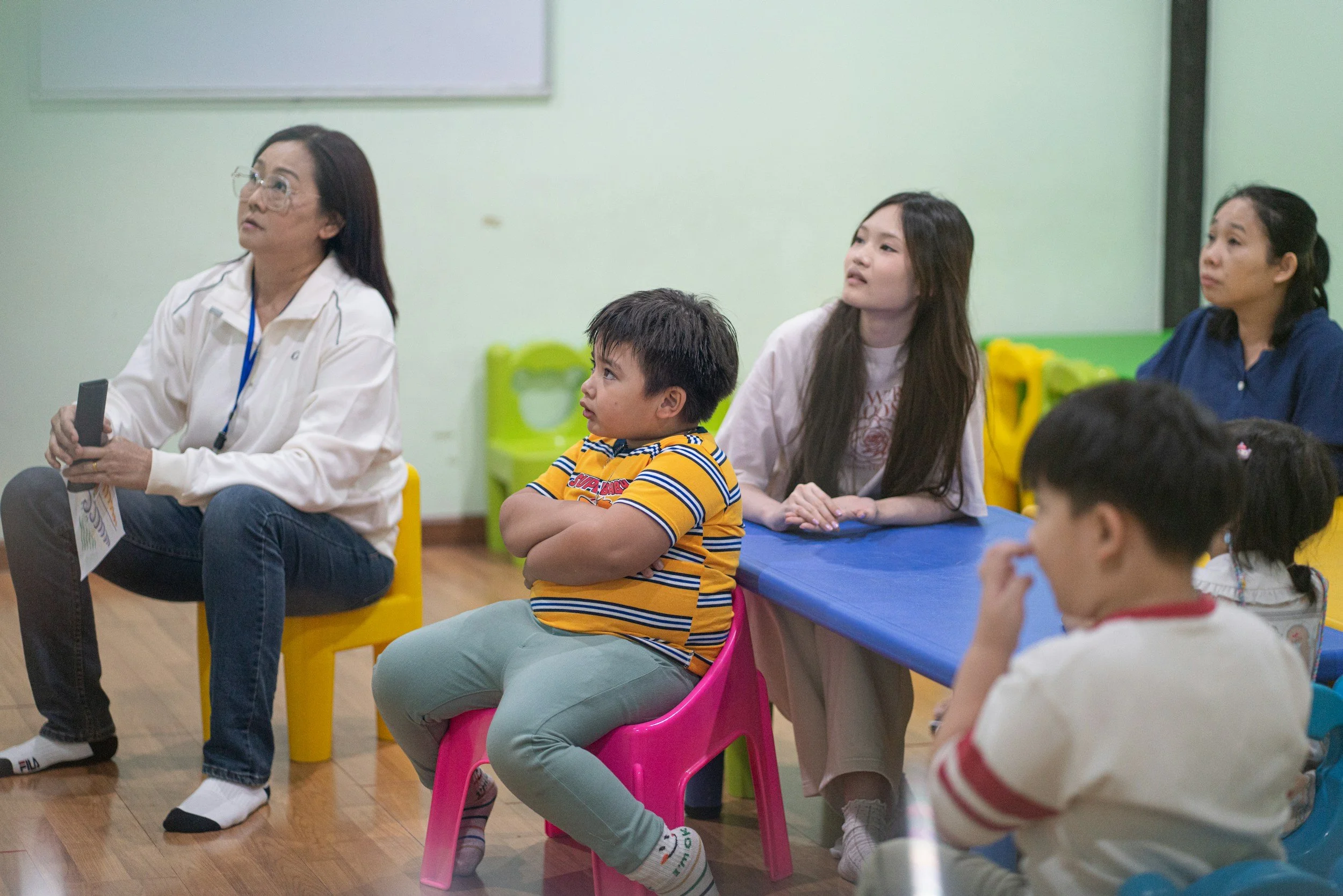
Many parents imagine therapy as a clinical, rigid experience — but a well-run ABA session looks a great deal like structured play. Sessions in a centre-based setting typically involve one-to-one time between the child and a trained therapist, guided by the goals in the child's individual plan.
A session might include discrete trial training, where a skill is practised in short, focused repetitions, alongside natural environment teaching, where learning is woven into play the child already enjoys. If a child loves cars, the therapist might use them to practise requesting, turn-taking, and colour naming. Breaks, movement, and preferred activities are built in so the child stays motivated and engaged. Data is collected throughout, and programmes are adjusted regularly based on what the numbers show.
ABA is most effective when it extends beyond the therapy room. Parent training is a core component of any quality programme: therapists coach parents on how to use the same strategies at home, from encouraging communication at mealtimes to managing transitions and bedtime routines.
Families in the UAE often juggle busy schedules, multiple languages at home, and extended family involvement — all of which a good therapy team will take into account. When parents, grandparents, and school staff respond to a child in consistent ways, new skills stick. Many parents find that the strategies they learn reduce daily stress for the whole household, not just the child receiving therapy.
Autism affects each child differently, and ABA rarely works in isolation. Many children benefit from a multidisciplinary approach that combines ABA with speech and language therapy to build communication, occupational therapy to support sensory processing and motor skills, and clinical psychology input for emotional wellbeing.
In practice, this might mean a child attends ABA sessions to build learning and social skills, sees a speech therapist to develop language, and works with an occupational therapist on sensory regulation strategies. When these professionals work under one roof — as they do in integrated centres in areas such as Al Jaddaf — communication between the team is seamless, and the child's goals stay aligned across every discipline.
Dubai offers a growing number of therapy options, which makes choosing a provider feel daunting. When visiting centres, parents should ask about the qualifications of the team — programmes should be designed and supervised by a BCBA — and how progress is measured and shared with families. Ask how often supervision occurs, how parent training is delivered, and how goals are reviewed.
It is also worth observing how staff interact with children. Warmth matters as much as credentials: children learn best from adults they trust and enjoy being with. Finally, consider practicalities such as location, session availability, and whether the centre coordinates with your child's school or nursery.
How many hours of ABA therapy does a child need?
It varies with the child's age, needs, and goals. Some children benefit from focused programmes of 10–15 hours per week, while others make the best progress with comprehensive programmes of 20 or more. A BCBA will recommend intensity based on assessment, and this is reviewed as the child progresses.
Is ABA therapy only for children with autism?
No. While ABA is best known as an autism intervention, its principles support children with ADHD, learning difficulties, and behavioural challenges. Any child who benefits from structured teaching and positive reinforcement can gain from ABA-based strategies.
At what age should ABA therapy start?
Therapy can begin as soon as developmental concerns are identified — in some cases before the age of two. Early intervention generally leads to stronger outcomes, but children of school age and beyond also make meaningful progress with a well-designed programme.
Will ABA change my child's personality?
A common and understandable worry. Modern, ethical ABA does not aim to change who a child is; it aims to give them tools — communication, independence, coping strategies — so they can express themselves and participate more fully in the world around them. Goals are always set with the family and centred on the child's quality of life.
How soon will we see progress?
Some families notice changes within weeks, particularly in engagement and communication attempts; other goals take months of consistent practice. Because ABA relies on continuous data collection, you will never be guessing — your child's team can show you objective progress at any point.
Every child deserves the opportunity to learn, connect, and flourish, and the right support at the right time makes all the difference. If you would like to discuss whether ABA therapy is right for your child, our multidisciplinary team in Al Jaddaf is here to help. Call us on +971 52 600 4107, email bloom@bloombeyond.me, or visit us at 601, 602 & 701 Al Nastaran Tower, Al Jaddaf Waterfront, Dubai to book an initial consultation.



.png)

.png)

.png)
.png)
.png)
.png)