If your child is fighting bedtime, climbing into your bed at three in the morning, or waking up exhausted before the school day even begins, you are far from alone. Sleep difficulties are one of the most common reasons Dubai families reach out to Bloom Beyond Enabling, and they sit quietly behind many of the issues that often get more attention, including anxiety, attention difficulties, sensory overload, and emotional outbursts.
The good news is that sleep is also one of the most treatable areas of childhood. With the right understanding of what is happening in your child’s body and mind, plus a small set of gentle, consistent strategies, most families see meaningful change within a few weeks. This guide walks Dubai parents through the science, the common culprits, the signs that warrant professional help, and the therapy approaches that work.
Sleep is not a passive pause in your child’s day. It is a busy, biological renovation project. During deep and dream sleep, the developing brain consolidates new learning, processes emotions, repairs tissue, releases growth hormone, and strengthens the immune system. For a Dubai child juggling demanding curricula, multicultural friendships, and a climate that often pushes families indoors, restorative sleep is the quiet engine behind everything else.
Research consistently shows that children who sleep well tend to concentrate better at school, manage frustration more easily, eat more healthily, and bounce back faster from minor illnesses. Children who sleep poorly, on the other hand, often look like they have attention, mood, or behaviour problems when the real culprit is simply chronic tiredness.
Recommended sleep needs vary by age. Toddlers between one and two years generally need eleven to fourteen hours including naps. Preschoolers from three to five years need ten to thirteen hours. Primary school children from six to twelve years need nine to twelve hours. Teenagers from thirteen to eighteen years still need eight to ten hours. Most Dubai children, according to regional school surveys, are falling short of these targets, often by an hour or more.
Every child is unique, yet certain themes appear again and again in our clinic.
Late and inconsistent bedtimes are perhaps the single biggest issue. Dubai’s social rhythms, late family dinners, and busy weekend evenings can quietly push bedtime later than the developing brain can handle.
Screens in the bedroom interfere with melatonin, the hormone that signals sleep. Even a brief scroll before lights out can delay the body clock by an hour or more. Tablets, phones, and televisions kept inside the bedroom also create a sense that the room is for play rather than rest.
Anxiety and overthinking are major drivers of bedtime battles, especially in school aged children and teenagers. The quiet of bedtime is often the first moment in a busy day when worries surface. A child who seems fine all day may suddenly become tearful, clingy, or restless once the lights go out.
Sensory processing differences can make falling asleep genuinely uncomfortable. Some children find tags, seams, certain fabrics, or even the hum of an air conditioner deeply unsettling. Other children need more proprioceptive input, such as a weighted blanket or firm cuddles, before their nervous system can settle.
Caffeine, late sugar, and irregular meal timing also play a part. Iced drinks, chocolate, and even some sparkling waters carry stimulants that linger for hours.
Medical issues such as enlarged tonsils, allergies, reflux, and snoring deserve a quick check with your paediatrician. Sleep apnoea in children is more common than many parents realise and benefits from early diagnosis.
Finally, transitions and stress often spike sleep difficulties. A new sibling, a school change, a parent travelling for work, or a recent move between countries can all rattle a child’s sense of safety at night.
Occasional bad nights are part of childhood. Persistent patterns are the signal to seek help. Consider reaching out to a clinical psychologist or paediatric therapist if any of the following sound familiar.
Your child takes longer than thirty minutes to fall asleep most nights. Your child wakes more than twice a night for several weeks. Bedtime regularly ends in tears or shouting, for either of you. Your child expresses fears, worries, or intrusive thoughts that block sleep. Daytime mood, focus, or behaviour has changed and you suspect tiredness is feeding the pattern. Your teen is awake until the early hours and exhausted by lunchtime. The whole family is feeling the strain of broken nights.
You do not need to wait for a crisis. Early support often prevents months of disrupted sleep.
Most sleep plans begin at home with a small set of practical anchors. Pick one or two to begin with, stay consistent for at least two weeks, and notice what shifts.
Set a wind down hour. Dim the lights and switch off screens around sixty minutes before sleep time. The brain reads dim light as a cue to release melatonin.
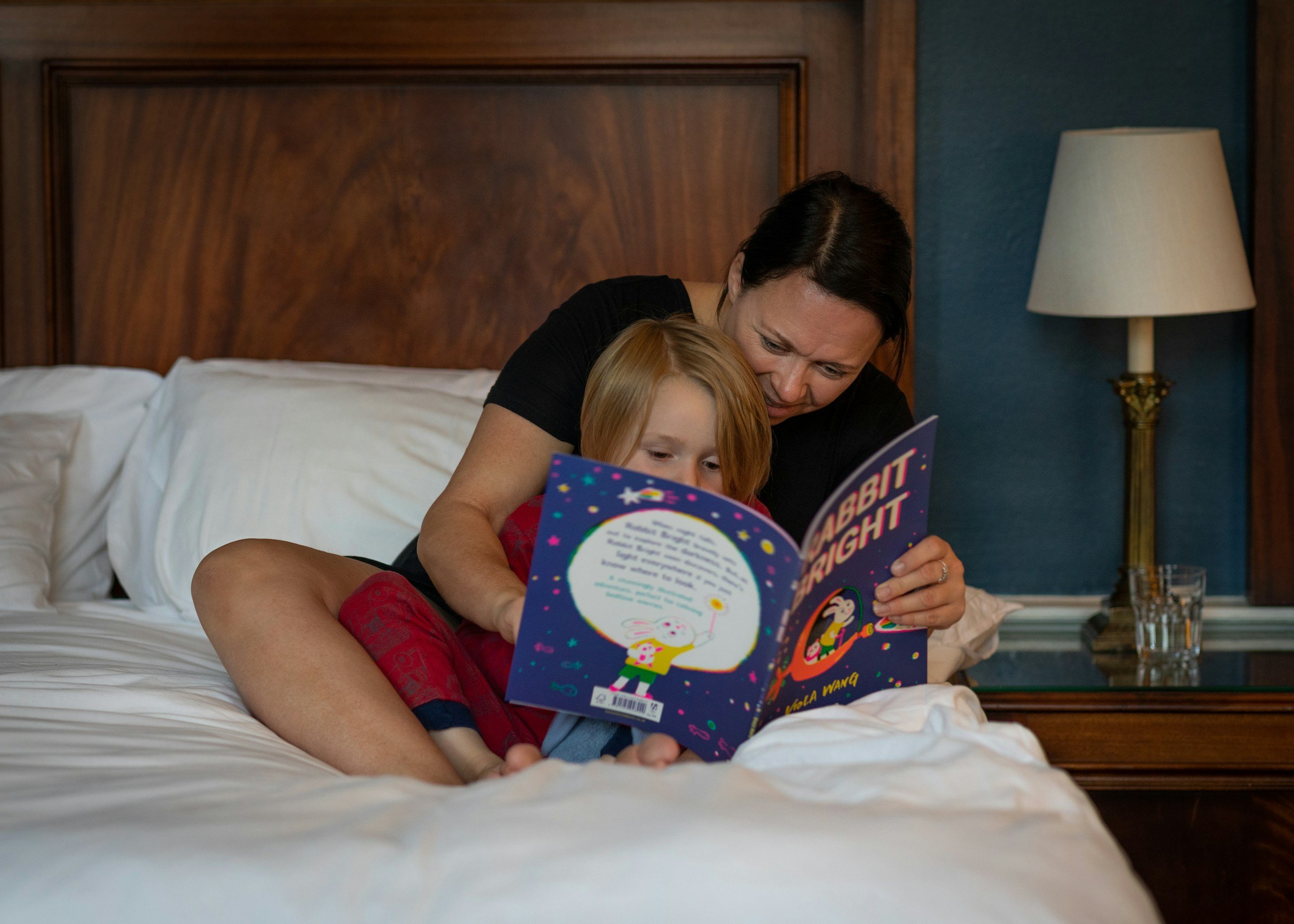
Build a predictable bedtime sequence. Bath, pyjamas, teeth, a calm story, a brief chat about the day, and a soothing goodnight ritual help the brain recognise that sleep is coming.
Keep weekday and weekend sleep times within an hour of each other. Large weekend shifts create what sleep scientists call social jet lag, which can leave your child feeling like they have flown across two time zones every Sunday night.
Make the bedroom cool, dark, and uncluttered. Dubai’s climate means air conditioning is often a friend at night, but the gentle white noise of a fan can also help sensory sensitive children.
Remove screens from the bedroom whenever possible. A traditional alarm clock is a small change with big results.
Offer a calming sensory tool. A weighted blanket appropriate to body weight, a soft body pillow, lavender pillow mist, or a familiar soft toy can reassure a settling nervous system.
Acknowledge worries instead of trying to talk them away. A simple worry journal kept by the bed allows a child to download anxious thoughts before sleep. Many children find that naming a worry shrinks it.
Limit caffeine, sugar, and heavy meals in the evening. Aim for the last big meal at least two hours before bed.
Avoid using sleep as a punishment or a bribe. Children need to associate bed with safety and restoration, not with consequences.
When home strategies are not quite enough, a focused course of therapy can make a remarkable difference. At Bloom Beyond Enabling, our clinical psychologists, occupational therapists, and family therapists work together to tailor a plan that fits the child, the family, and the underlying cause of the sleep difficulty.
Cognitive Behavioural Therapy for Insomnia, often called CBT I, is the gold standard for children and teenagers who lie awake worrying or wake repeatedly through the night. It teaches the brain to associate the bed with sleep again and gently retrains unhelpful sleep beliefs.
Acceptance and Commitment Therapy supports older children and teens who are caught in cycles of frustration about not sleeping. Learning to relate differently to anxious thoughts often loosens their grip.
Occupational therapy helps children whose sleep difficulties are rooted in sensory processing. A trained occupational therapist can design a sensory diet, recommend bedroom adjustments, and introduce calming proprioceptive tools that prepare the body for rest.
Parent coaching equips you with the language, boundaries, and predictability that make new sleep routines stick. Many families tell us that the coaching component is what changed the entire household, not just bedtime.
Mindfulness based practices, guided imagery, breathing exercises, and gentle hypnotherapy can also be woven in for children who are old enough to engage with them.
The aim of every plan is the same. We want your child to fall asleep with ease, stay asleep, and wake up ready for the day. We also want you to reclaim your evenings.
Teen sleep deserves its own paragraph. During adolescence, the body clock naturally shifts later by around two hours. A fourteen year old whose body says ten o’clock is the new bedtime is not being defiant. They are simply biologically wired to fall asleep later. Combine that with early school start times, late tutoring, social media, and exam pressure, and many Dubai teens are running on dangerously little sleep.
The same evidence based principles apply, with extra attention to phone use at night, weekend lie ins that do not stretch beyond two hours, and morning light exposure that helps reset the body clock. If your teenager is sleeping less than seven hours on most nights, please consider a professional review. Sleep deprivation in adolescence is a major risk factor for anxiety, depression, and accidents.
Some sleep issues require a medical lens. If your child snores loudly, gasps for breath at night, sleepwalks frequently, experiences night terrors that distress them, has restless legs, or wakes with morning headaches, please consult your paediatrician. A sleep study may be recommended. Therapy and medical care work beautifully together, and our team is happy to coordinate with your child’s doctor.
Sleep difficulties can quietly drain a whole family, leaving parents feeling exhausted, anxious, and often guilty. Please know that none of this is a reflection of your parenting. Children’s sleep is shaped by biology, temperament, environment, and the realities of life in a fast moving city. With the right understanding and a small set of consistent supports, the picture can change beautifully.
If you are ready for help, Bloom Beyond Enabling is here. Book a confidential consultation today and our team will guide you toward calmer nights and brighter mornings for everyone in your home.



.png)

.png)

.png)
.png)
.png)
.png)