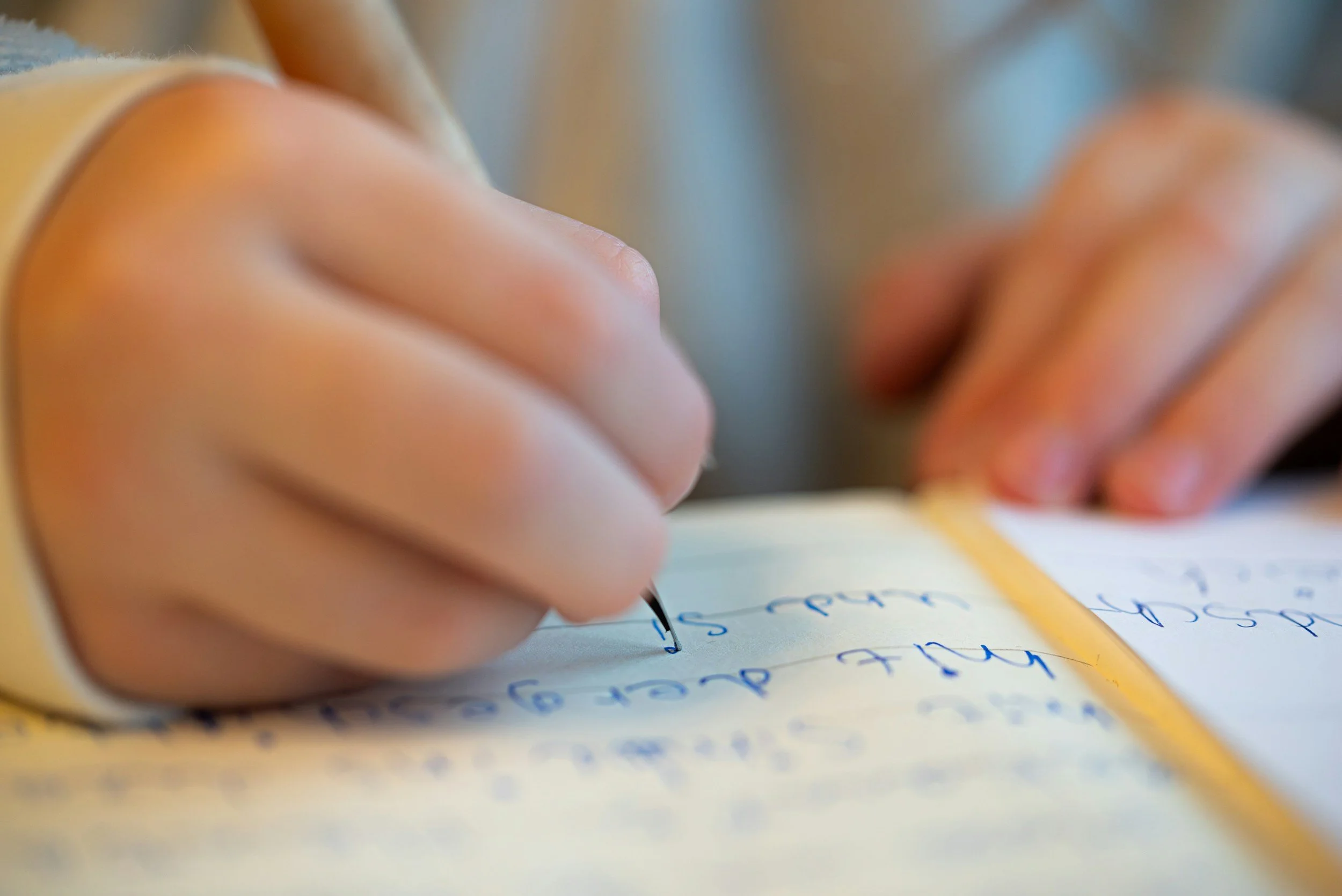
Handwriting is one of the most important skills a child develops in the early school years, but for some children in Dubai, the simple act of putting pencil to paper feels like a constant struggle. If your child writes slowly, avoids written work, or produces script that is difficult to read despite real effort, dysgraphia could be at the root of the difficulty. Dysgraphia is a specific learning difference that affects writing, and like dyslexia and dyscalculia, it responds beautifully to early identification and the right kind of support.
At Bloom Beyond Enabling, our clinical psychologists, occupational therapists, and remedial educators work closely with families across Dubai and the wider UAE to help children unlock their full writing potential.
Dysgraphia is a neurological learning difference that affects a person’s ability to produce written language. It is not a sign of low intelligence or laziness. Children with dysgraphia often understand exactly what they want to say. The disconnect happens between the brain, the hand, and the page. Some children struggle with the physical act of writing, others with spelling and organising thoughts on paper, and many with both.
There are several recognised types of dysgraphia. Motor dysgraphia stems from fine motor skill challenges that make pencil control difficult. Spatial dysgraphia affects a child’s understanding of space on the page, with words drifting off lines or running together. Dyslexic dysgraphia describes spelling and word retrieval difficulties that show up in writing. Many children present with a mix of these patterns.
Many Dubai parents and teachers assume a messy or slow writer simply needs more practice. Because writing is so tied to school performance, dysgraphia is often missed until a child is several grades into primary school and the gap between their oral knowledge and written output becomes impossible to ignore. It is also commonly mistaken for poor focus or behavioural defiance, especially when a bright child suddenly resists writing tasks. Spotting the signs early changes a child’s entire educational trajectory.
Watch for several of the following patterns over time:
Writing that is unusually slow even after years of practice. Letters and numbers that look inconsistent in size, slant, or spacing. Difficulty staying on the line or within margins. An awkward or painful pencil grip that does not relax with age. Mixing of upper and lower case letters within the same word. Spelling that varies wildly within the same piece of work. Trouble copying from the board or a textbook. Strong oral storytelling skills that vanish on paper. Avoidance, anxiety, or meltdowns around homework that involves writing. Hand fatigue, cramping, or visible tension after only a few minutes of writing.
If you recognise several of these patterns and they have continued for more than a few months, it is time to seek a professional evaluation.
Writing difficulties do not stop at the page. Children with dysgraphia often dread school, lose confidence, and shrink back from sharing their ideas. Over time, this can erode self esteem, fuel academic anxiety, and dampen a child’s natural curiosity. Identifying dysgraphia early gives a child both the skills and the emotional reassurance that they are capable, intelligent, and supported.
Our team uses a layered approach so every child receives the right blend of support for their unique profile.
Our clinical psychologists carry out detailed assessments to understand the precise nature of the writing difficulty, rule out related learning differences, and provide a clear roadmap for parents, teachers, and therapists.
Many children with motor based dysgraphia benefit enormously from occupational therapy. Our therapists strengthen hand muscles, refine pencil grip, improve visual motor integration, and build the underlying skills that make writing physically possible. Sensory regulation work is often woven in for children who tense up at the desk.
Our remedial educators work on letter formation, spacing, spelling patterns, and the organisation of ideas on the page. Multisensory techniques, structured handwriting programmes, and assistive technology can transform a child’s relationship with writing.
Children carry the weight of repeated frustration. Our therapists support emotional regulation, rebuild self esteem, and equip families with the language to celebrate progress rather than fixate on perfection.
Switch the focus from neat writing to confident communication while support is underway. Allow your child to dictate stories or use voice to text technology so ideas can flow.
Make writing playful. Sand trays, shaving foam, salt boxes, and large chalkboards turn handwriting into a sensory adventure rather than a chore.
Build hand strength through play. Theraputty, clothes pegs, beading, and resistance scissors all strengthen the small hand muscles that handwriting demands.
Break tasks into shorter, achievable chunks and celebrate every milestone, however small it seems.
Speak with your child’s school. Reasonable accommodations like extended time, alternative recording methods, or printed worksheets can level the playing field while skills grow.
Dysgraphia rarely travels alone. Many children also experience signs of dyslexia or dyscalculia, and our team often assesses for the full picture. If you have already explored either of those learning differences, our existing guides on dyslexia and dyscalculia can give you more context as you build a complete support plan.
If your child is struggling with writing in ways that simply more practice does not seem to fix, please do not wait. Early intervention transforms outcomes, protects self esteem, and gives your child the tools to thrive across every subject.
At Bloom Beyond Enabling, our team brings clinical psychology, occupational therapy, and remedial training together under one warm, family centred roof. We would love to walk this journey with you.
WhatsApp us on +971 52 600 4107 or write to bloom@bloombeyond.me to book a confidential consultation.
Your child’s brilliance does not have to live on the tip of their tongue. With the right support, it can find its way to the page.


.png)

.png)

.png)
.png)
.png)
.png)