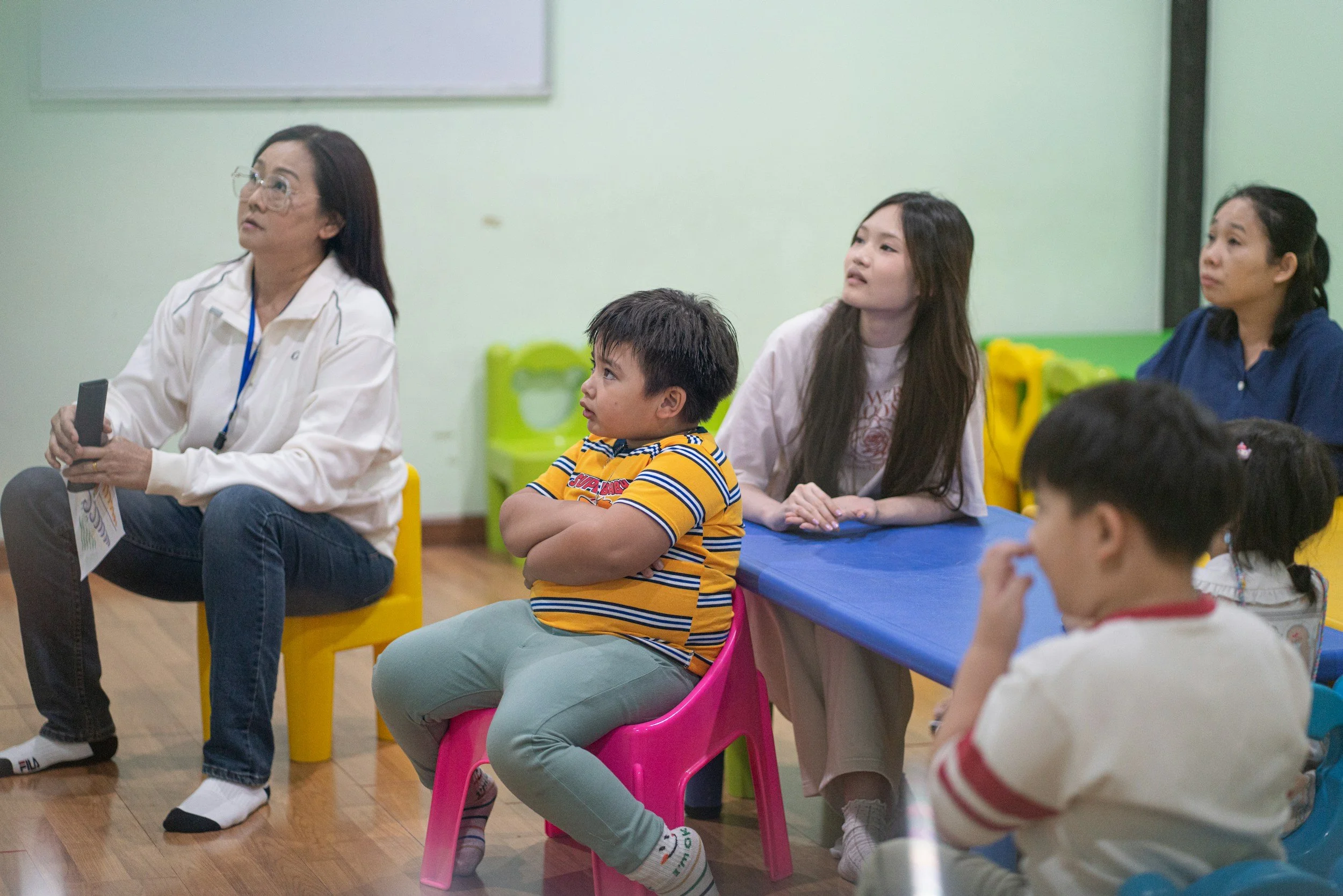
If your child cannot sit still during homework, forgets instructions five minutes after hearing them, blurts out answers in class, or bounces from one activity to the next without finishing any, you are not alone, and you are not failing as a parent. These behaviours may be more than restlessness. They could be signs of Attention Deficit Hyperactivity Disorder, more commonly known as ADHD, one of the most common neurodevelopmental conditions in childhood.
At Bloom Beyond Enabling in Dubai, we have walked alongside many families navigating these very questions. Whether your concern is school performance, friendships, mood, or daily routines, this guide is for you. We will unpack what ADHD really is, the early signs to watch for, the gold standard ways to assess it, and the practical, compassionate support that helps children thrive at home and in the classroom.
ADHD stands for Attention Deficit Hyperactivity Disorder. It is a neurodevelopmental difference in how children regulate attention, impulses, and activity levels. Children with ADHD are not lazy, defiant, or poorly disciplined. Their brains process executive function tasks (planning, organising, starting and finishing work, managing emotions, and waiting their turn) in a different way.
The World Health Organization estimates that ADHD affects around five percent of children worldwide. In the UAE, awareness has grown rapidly over the past decade, and Dubai families increasingly seek timely assessment so their children can receive support early.
Clinicians describe three patterns, and a child may fit one or move between them as they grow.
This is sometimes called the quiet type because hyperactivity is not the obvious feature. Children who are mostly inattentive may daydream, lose belongings, struggle to follow multistep instructions, and find sustained mental effort exhausting. Girls are more frequently diagnosed with this presentation, and it is often missed in early years because the child is not disruptive.
These children are constantly on the move. They climb when they should be seated, talk over others, find it hard to play quietly, and act before they think. Parents often describe them as driven by a motor that never switches off.
The most common pattern is a mix of inattention and hyperactive impulsive features. A child may swing between zoning out during reading and pinging around the living room within the same hour.
ADHD typically becomes visible between ages four and twelve, although subtle signs may appear earlier. Watch for patterns that occur in more than one setting (home, school, and social situations) and that interfere with everyday life.
In younger children you may notice:
Inability to listen even during enjoyable activities
Frequent meltdowns over transitions
Constant climbing or running with little awareness of danger
Trouble taking turns or sharing
Difficulty falling asleep or staying asleep
In older children and tweens you may notice:
Homework battles that drag on for hours
Forgotten books, lunchboxes, or uniforms despite repeated reminders
Careless mistakes in schoolwork that mask real ability
Difficulty making or keeping friends
Low self esteem or frustration that boils over into tears or anger
A single trait does not mean ADHD. The clinical picture is built from a cluster of behaviours that persist for at least six months and clearly affect learning, relationships, or daily routines.
There is no single cause, but research points to a strong genetic component. If a parent or sibling has ADHD, the likelihood for a child rises significantly. Brain imaging studies show that pathways involving dopamine and norepinephrine, the neurotransmitters that govern attention and motivation, develop differently in children with ADHD. Sleep, nutrition, screen time, prenatal factors, and early childhood stress can shape how symptoms present, but they do not cause the underlying condition.
Importantly, parenting style does not cause ADHD. Loving, structured parenting can ease daily life, yet the wiring difference remains.
Reach out to a clinical psychologist if any of the following are true:
Your child’s behaviour is affecting their academic progress
School teachers are raising concerns about focus, behaviour, or social skills
Daily routines feel like a constant battle
Your child seems sad, anxious, or unusually frustrated by their own performance
You as a parent feel exhausted, judged, or unsure how to help
At Bloom Beyond, our clinical psychology team conducts thorough neuro psycho educational assessments, including the Conners and Vanderbilt scales, behaviour observations, parent and teacher interviews, and IQ and learning evaluations where indicated. The result is a clear picture of your child’s strengths, areas of need, and a personalised plan.
Our assessment process is gentle, collaborative, and never rushed. Here is what families can expect.
Step one is an intake consultation where parents share concerns, family history, and developmental milestones.
Step two is a structured evaluation of your child using age appropriate cognitive and behavioural assessments.
Step three involves gathering input from your child’s school through standardised questionnaires.
Step four is a feedback session where our psychologist explains findings in plain language, answers your questions, and co designs a support plan.
There is no single ADHD test. A reliable diagnosis combines multiple sources of information across settings, which is why a multidisciplinary clinic like Bloom Beyond is so valuable.
Once we understand your child, we tailor support across several pillars.
Our behaviour therapists, including BCBA and QASP S certified clinicians, help children build focus, follow routines, and develop self regulation through structured, reward based programmes. Parents are coached at every step so progress carries into daily life.
For older children and adolescents, CBT helps untangle the anxiety, low mood, and self critical thinking that often grow alongside ADHD. Children learn practical strategies to manage frustration, plan their time, and reframe unhelpful thoughts.
Many children with ADHD also experience sensory processing differences, fine motor challenges, or difficulty with handwriting and self care. Our occupational therapists use play based interventions to strengthen body awareness, regulation, and independence.
When ADHD coexists with dyslexia, dyscalculia, or other learning differences, our remedial educators bridge gaps using multisensory teaching strategies aligned with the British, IB, and American curricula popular across Dubai schools.
Perhaps the most powerful lever is parent coaching. We teach you the language of positive behaviour support, how to set up your home environment for success, and how to advocate for your child within Dubai’s school system.
While professional support makes a lasting difference, small changes at home can ease the load straight away.
Use visual schedules so your child can see the day ahead.
Break tasks into short bursts followed by movement breaks.
Praise effort, not just outcomes.
Reduce background noise during homework, and let your child fidget with a quiet tool if it helps them focus.
Keep mornings predictable. Lay out clothes, bags, and breakfast items the night before.
Protect sleep. Most children with ADHD need consistent bedtimes and screen free wind down routines.
Notice and name strengths. Children with ADHD are often creative, curious, energetic, and deeply empathetic.
Many children carry ADHD into adolescence and adulthood, although hyperactivity often softens with age. With early support, however, children build the executive function skills, coping tools, and self belief that turn ADHD from a daily struggle into a manageable difference. Many of the most creative, entrepreneurial, and resilient adults around the world have ADHD.
Yes. ADHD affects roughly five percent of children globally, and Dubai is no exception. Awareness and access to assessment have improved significantly across the UAE.
Medication is one option, never the only one. At Bloom Beyond we focus on therapy, parent coaching, and school collaboration first. If medication is being considered, families are referred to trusted paediatric psychiatrists, and therapy continues alongside.
A formal assessment can actually open doors. Many Dubai schools offer accommodations such as extended exam time, preferential seating, and learning support. Our psychologists can prepare clear reports that schools accept.
Our team supports families in English, Arabic, Hindi, Malayalam, Tamil, and more. Assessment materials are selected to suit your child’s primary language.
Raising a child with ADHD can feel isolating, especially in a busy city where everyone seems to be juggling work, school runs, and high expectations. The truth is that ADHD is common, treatable, and full of hidden gifts. The right support transforms not just school grades but the whole texture of family life.
If you have read this far and recognised your child in any of these descriptions, take a moment to breathe. Then take the next small step. Book a consultation with the Bloom Beyond Enabling team and let us walk this journey with you.
Message us on WhatsApp at +971 52 600 4107, or learn more about our Clinical Psychology, Behaviour Therapy, and Occupational Therapy services on the Bloom Beyond website.



.png)

.png)

.png)
.png)
.png)
.png)