Every parent waits eagerly for their child's first words. When those words are slow to arrive — or when speech seems to plateau or regress — it can feel isolating and worrying. The good news is that speech and language therapy is one of the most evidence-based, effective interventions available for children, and early support can make a profound difference to a child's development, confidence, and quality of life.
At our centre in Al Jaddaf, Dubai, we work with children across a wide range of speech and language challenges. Whether your child is not yet talking, struggles to be understood, has difficulty following instructions, or is showing signs of a stutter, our team of qualified speech-language therapists is here to help.
Speech and language therapy (sometimes called speech therapy or SLT) is a clinical discipline that addresses difficulties with communication — including how a child produces sounds, structures sentences, understands language, and uses communication in social contexts.
A speech-language therapist (SLT) assesses how a child communicates compared to developmental norms, identifies the specific areas of difficulty, and designs an individualised therapy programme to address them. Sessions are typically play-based for younger children, making therapy engaging and motivating while building real skills.
Speech therapy in Dubai supports children with a wide range of needs, including delayed speech or language development, articulation difficulties (unclear speech sounds), stuttering and fluency disorders, language comprehension challenges, autism spectrum disorder (ASD) and related communication differences, hearing impairment and its impact on speech, selective mutism, and feeding and swallowing difficulties in younger children.
Understanding typical development can help parents identify when to seek support. While every child develops at their own pace, there are general milestones that speech-language therapists use as benchmarks.
By 12 months, most children say one or two words intentionally, babble with varied sounds, and respond to their name. By 18 months, a typical vocabulary of around 10–20 words is expected. By 24 months, children are usually combining two words together (such as "more milk" or "daddy go"), and strangers should be able to understand roughly 50% of what they say.
By three years, children typically use three- to four-word sentences, ask simple questions, and are understood by unfamiliar adults about 75% of the time. By four years, speech should be almost entirely clear to strangers, and children should be able to tell simple stories and engage in back-and-forth conversation.
If your child is not meeting these milestones — or if you notice a regression in previously acquired skills — it is worth speaking with a professional. Early identification leads to earlier intervention, which consistently produces better outcomes.
The early years of childhood represent a critical window for language development. The brain is at its most neuroplastic during this period, meaning it is more adaptable and responsive to new learning than at any later stage of life. Research consistently shows that children who receive speech therapy in their early years make significantly greater gains than those who begin intervention later.
Early intervention also reduces the downstream effects of communication difficulties. Children who struggle to express themselves are more likely to experience frustration, behavioural challenges, and difficulties with social relationships. As they enter school, language delays can affect literacy, numeracy, and overall academic performance.
In Dubai, where many families speak multiple languages at home, parents sometimes worry that bilingualism is causing or contributing to a language delay. It is important to understand that bilingualism does not cause language delays — children learning more than one language follow their own developmental timeline, but the total number of words across all languages should still align broadly with expected milestones. If you have concerns, a bilingual assessment with a qualified SLT can provide clarity.
When you first bring your child to see a speech-language therapist at our Dubai centre, the initial session will involve a comprehensive assessment. This typically includes a parent or caregiver interview, during which the therapist will gather information about your child's developmental history, family context, medical background, and specific concerns.
The therapist will then observe and interact with your child, using standardised assessments alongside clinical observation to evaluate receptive language (what your child understands), expressive language (what your child can say), speech sound production, and social communication skills.
Following the assessment, the therapist will share their findings and recommendations with you in a clear, jargon-free way. If therapy is recommended, they will outline the goals, explain the approach they plan to take, and discuss how you can support your child's progress at home between sessions. Parent involvement is a vital part of effective speech therapy — the strategies learnt in sessions become most powerful when practised consistently in everyday life.
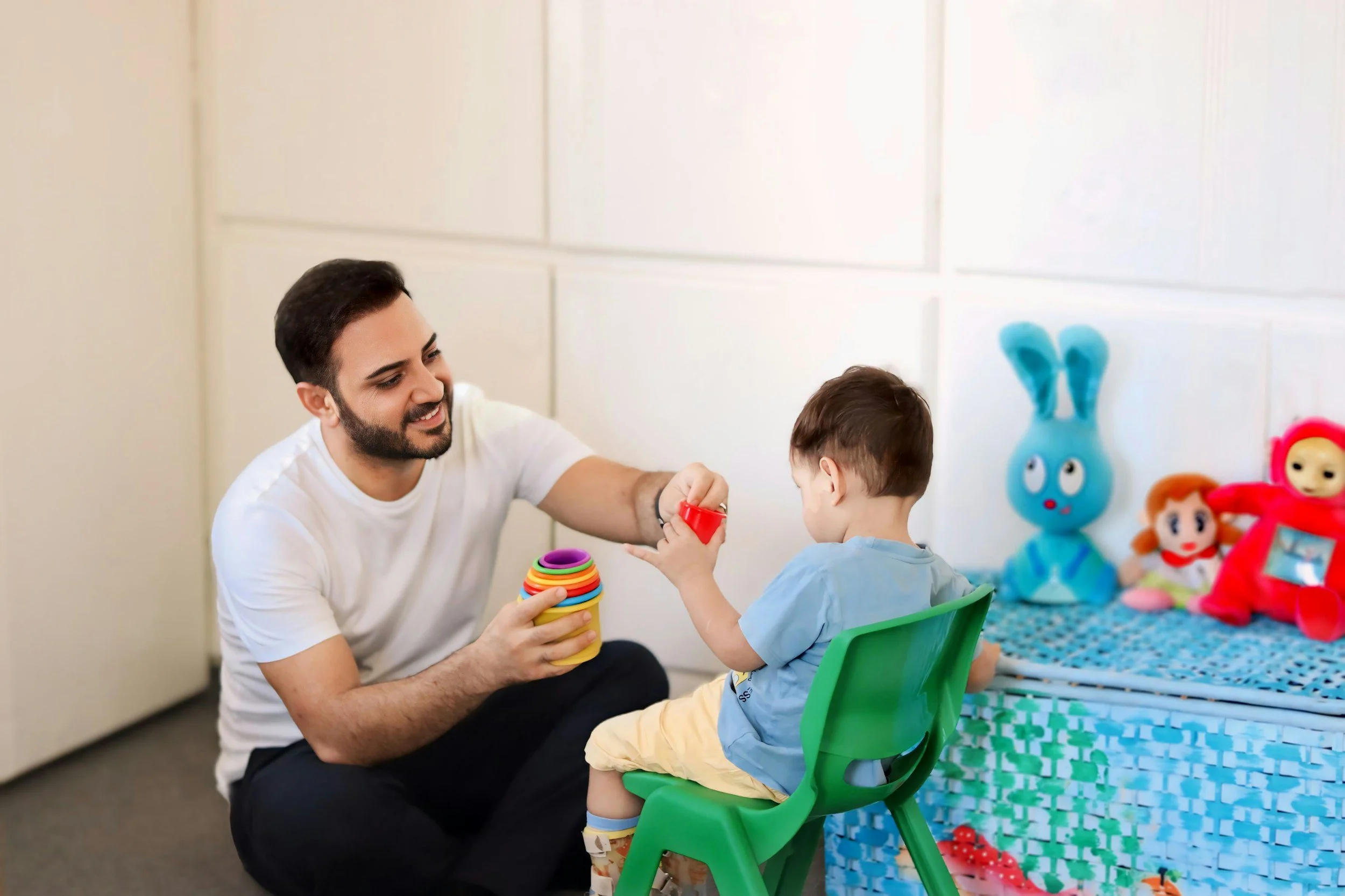
Play-based therapy is central to work with younger children — therapists use games, books, toys, and activities to naturally elicit and reinforce communication skills in a low-pressure, enjoyable environment.
For children with autism spectrum disorder, therapists may use approaches such as the Picture Exchange Communication System (PECS), aided language stimulation, or elements from the SCERTS framework to build functional communication. In many cases, SLT runs alongside or in conjunction with ABA therapy for a holistic approach.
For older children with articulation difficulties, therapists may use structured phonological programmes that target specific sound patterns. For children who stutter, therapy focuses on fluency techniques, reducing anxiety around speaking, and building confidence.
Augmentative and Alternative Communication (AAC) — including communication apps and high-tech devices — is recommended for non-verbal or minimally verbal children as a bridge to communication and, in many cases, a springboard for developing speech.
Speech therapy sessions are most effective when the skills practised in the clinic are reinforced at home. There are many simple, powerful ways that families can support their child's language development in everyday life.
Talk throughout the day. Narrate what you are doing — "I'm washing the apples," "Let's put on your shoes" — using clear, simple language. This builds vocabulary and models sentence structure without any pressure on the child to respond.
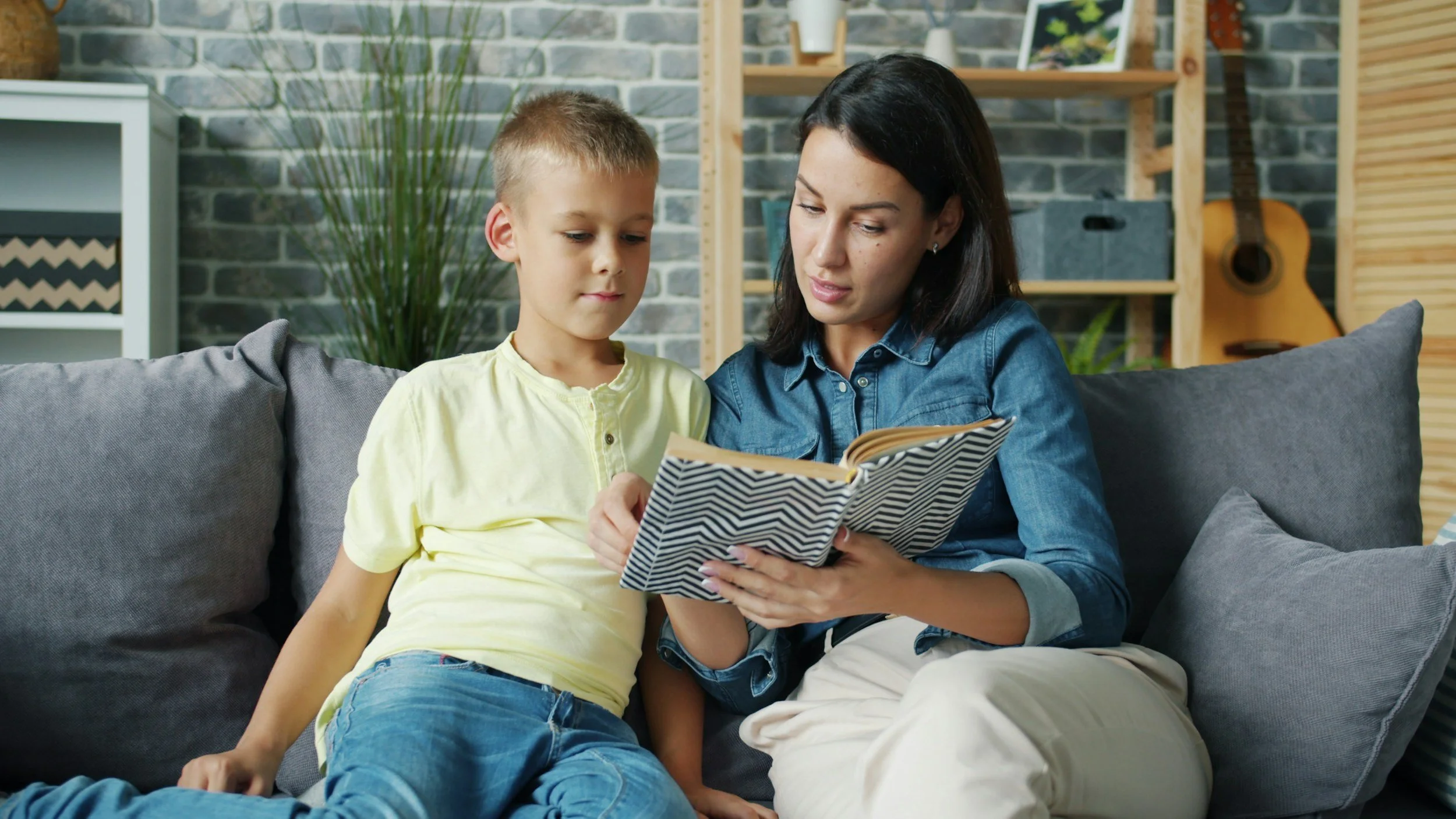
Read together daily. Shared reading is one of the most powerful ways to build language. Point to pictures, ask open questions ("What do you think will happen next?"), and let your child lead sometimes — following their gaze and interest makes reading a joint, interactive experience.
Reduce screen time and increase face-to-face interaction. Language is learnt primarily through human interaction. Prioritising conversation, play, and shared activities over passive screen viewing gives children more of the language input they need.
Follow your child's lead. When your child shows interest in something, join them there. Comment on what they are doing rather than directing or questioning. This reduces pressure and creates a natural, enjoyable communication exchange.
At what age should I be concerned about my child's speech?
If your child is not babbling by 12 months, not using any words by 16 months, not combining two words by 24 months, or if you notice any loss of previously acquired language skills at any age, it is worth seeking an assessment. Trust your instincts — if something feels off, early assessment is always worthwhile and carries no downside.
Can a bilingual child have speech therapy in Dubai?
Absolutely. Our therapists in Dubai are experienced in working with multilingual children and can conduct assessments that account for bilingual development. Therapy can be delivered in English and, where possible, in the child's home language with the support of family.
How long will my child need speech therapy?
This varies enormously depending on the nature and severity of the difficulty, the child's age, and how consistently strategies are practised at home. Some children make rapid progress in a matter of months; others may benefit from ongoing support over a longer period. Your therapist will review progress regularly and update goals accordingly.
What is the difference between a speech delay and a language disorder?
A speech delay means a child is developing speech and language skills in the typical sequence but more slowly than expected. A language disorder involves difficulties in the underlying language system itself — affecting comprehension, expression, or both — that go beyond a simple lag in timing. Both are treatable, and early assessment helps determine the right approach.
Will my child "grow out of it" if I wait?
Some mild speech delays do resolve naturally. However, research shows that for many children, waiting leads to a widening gap between their language skills and those of their peers. Early assessment carries no risk and can either provide reassurance or help your child access support sooner. We always recommend seeking advice rather than waiting and worrying.
If you have concerns about your child's speech, language, or communication, we warmly invite you to get in touch with our team. We offer thorough assessments and compassionate, evidence-based therapy in a welcoming environment designed for children.
Contact us at +971 52 600 4107, email bloom@bloombeyond.me, or visit us at 601, 602 & 701 Al Nastaran Tower, Al Jaddaf Waterfront, Dubai. We are here to support your child and your family every step of the way.


.png)

.png)

.png)
.png)
.png)
.png)