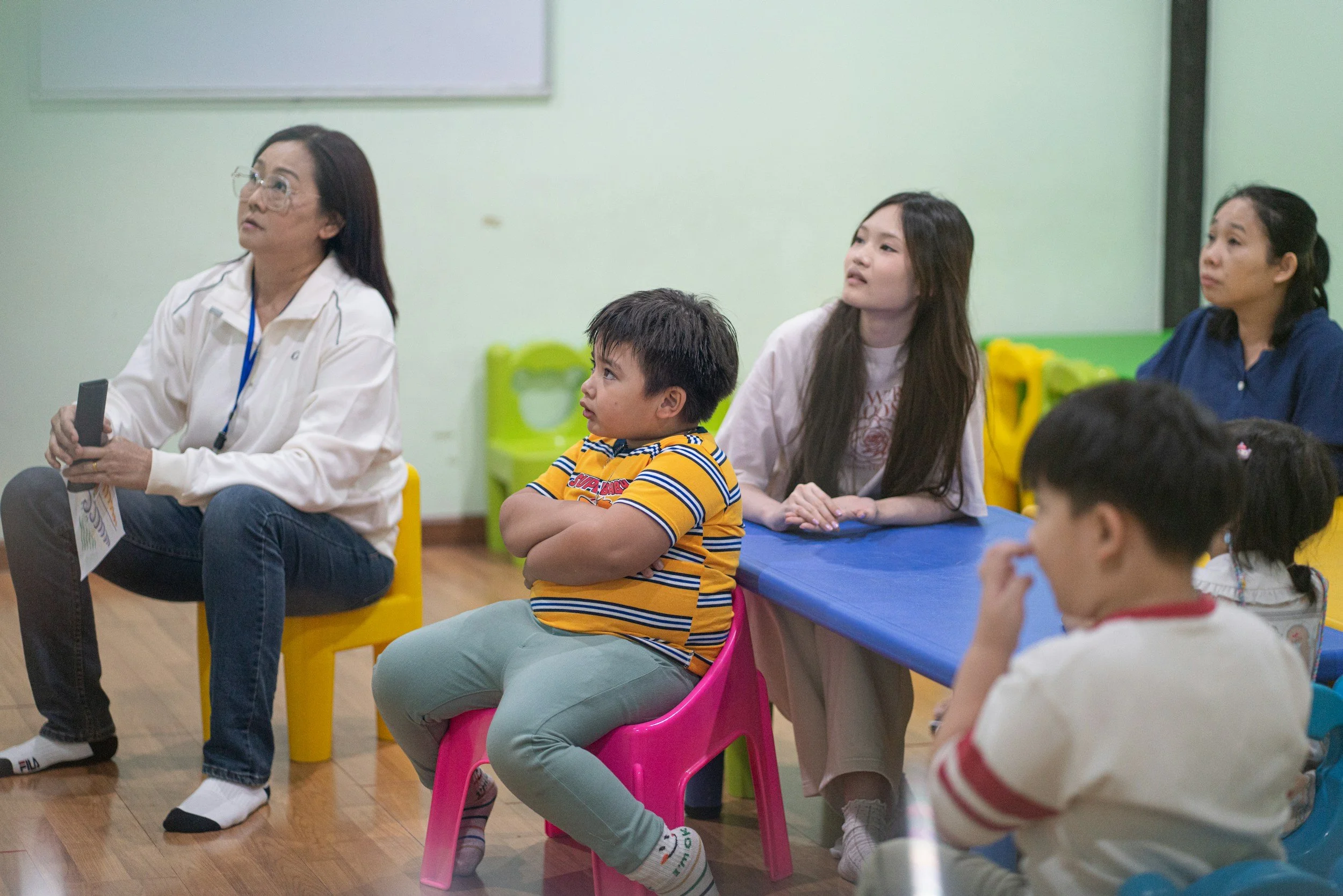
Parenting is one of the most rewarding and demanding journeys a person can undertake. When your child has additional needs — whether that is autism, ADHD, a language delay, sensory processing difficulties, or a learning difference — the journey brings its own distinct layer of complexity, emotion, and love.
At Bloom Beyond Enabling in Al Jaddaf, Dubai, we work closely with families every day. What we hear most often from parents is not just a request for clinical guidance, but for practical, honest advice they can use in the school run, at the dinner table, and in the moments between therapy appointments. This post is our attempt to offer exactly that.
A diagnosis — whether it is autism spectrum disorder, ADHD, dyscalculia, or developmental delay — is a doorway, not a destination. It opens access to the right support and helps professionals design effective interventions. But no two children with the same diagnosis are alike.
Take time to understand your individual child's strengths, triggers, preferred communication style, and sensory profile. Keep a simple journal for a few weeks and note: what times of day is your child most regulated and receptive? Which environments cause them distress, and which seem calming? What activities bring genuine joy and focus? What types of communication work best — verbal, visual, physical prompting?
This personalised knowledge is more powerful than any general advice. Share it freely with teachers, therapists, and grandparents. You are your child's best advocate, and your observations are clinical gold.
Children with neurodevelopmental differences almost universally benefit from predictability. When the structure of the day is consistent and transitions are well-signalled, the brain's threat-response system is less activated — which means more capacity for learning, connection, and joy.
Visual schedules. A simple sequence of picture cards or printed photos showing the order of daily activities reduces anxiety and supports children who process visual information better than verbal instructions.
Transition warnings. Give advance notice before any change in activity: "In five minutes, we are leaving the park." This is especially important for children with autism or sensory processing differences, for whom abrupt transitions can trigger significant distress.
Consistent routines around key stress points. Morning and bedtime routines are common flashpoints. Invest time in designing a routine that works, write it down, and stick to it as consistently as possible — even at weekends.
Many children with special needs experience the world in a way that makes standard verbal communication challenging. This does not mean communication is impossible — it means you may need to adapt your approach.
For children with language delays or autism, Augmentative and Alternative Communication (AAC) tools — from picture exchange systems to tablet-based communication apps — can dramatically reduce frustration and open up new pathways for expression. Our speech therapists at Bloom Beyond can guide you through the options available.
For all children, reduce the cognitive load of your language: shorter sentences, slower pace, and allowing adequate processing time before repeating yourself or adding more words. A common mistake is to interpret silence as non-compliance; for many children, silence means processing. Also consider what you communicate non-verbally. Your tone of voice, facial expression, and level of tension in your own body are picked up immediately by children with sensory sensitivity. Regulated parents help regulate children.
When a child has significant behavioural or emotional challenges, it is easy for parenting to become largely corrective — focused on managing, redirecting, and reducing unwanted behaviours. This is understandable, but a relationship built primarily on correction creates distance.
Research consistently shows that co-regulation — the process by which a calm, connected adult helps a dysregulated child return to a settled state — depends on the quality of the attachment relationship between parent and child. The more connected your child feels to you, the more effectively your presence calms their nervous system.
Try to build in daily special time — 10 to 15 minutes in which you follow your child's lead completely, with no agenda, no instructions, and no devices. Let them choose the activity. Narrate what they do warmly and without judgement. This practice, drawn from DIR/Floortime and play therapy approaches, consistently strengthens attachment and reduces overall behavioural difficulties over time.
Parent wellbeing is not a luxury or an afterthought. It is a clinical necessity. Research from the UAE and globally confirms that parent stress directly impacts child outcomes in neurodevelopmental conditions. A depleted, overwhelmed parent cannot provide the consistent, regulated co-regulation their child needs.
Seek out a support community, whether through parent groups in Dubai, online networks of families navigating similar experiences, or individual counselling. Grief, exhaustion, pride, and hope can coexist in parenting a child with special needs, and all of those feelings are valid. Bloom Beyond's clinical psychology service includes support for parents, not only for children. Establish clear roles if you are co-parenting, so that one parent is not carrying a disproportionate load. And when you do take time to rest or pursue something for yourself, do so without guilt — your child benefits from a parent who is replenished.
Children with special needs often have multiple professionals involved in their care — a speech therapist, an occupational therapist, a psychologist, and a school inclusion coordinator. The most impactful outcomes happen when all of these people work from a shared understanding and consistent approach.
Ask for regular coordination meetings. Share your home observations with the therapy team, and ask the therapy team to share strategies you can practise at home between sessions. The hours your child spends with us at Bloom Beyond represent a fraction of their week — the generalisation of skills into daily life happens through you.
If your child's school is not providing adequate support, the UAE has provisions for Individual Education Plans (IEPs) for students with recognised special needs. Understanding your rights as a parent in Dubai's education system is a powerful tool.
When should I seek a formal diagnosis for my child?
If you have persistent concerns about your child's development — speech, behaviour, social skills, motor skills, or learning — seeking a professional assessment sooner rather than later is always the right decision. Early intervention consistently leads to better long-term outcomes. An assessment does not commit you to a label; it gives you information.
How do I explain my child's needs to relatives who do not understand?
Keep explanations simple and focus on what your child needs rather than what is "wrong" with them. Share helpful resources, invite relatives to observe therapy sessions if possible, and gently correct misconceptions without expecting immediate understanding. Change in family attitudes often happens gradually.
My child refuses all therapy — what can I do?
Therapy refusal is common, especially in early stages or if a child has had negative experiences elsewhere. At Bloom Beyond, we prioritise building genuine rapport before introducing structured goals. Speak with the therapist about your child's reluctance — it is important information, and a good therapist will adjust their approach accordingly.
How do I balance my special needs child's needs with those of my other children?
Named time with each child, honest age-appropriate conversations with siblings, and involving siblings in appropriate ways (not as carers) can all help. Many siblings of children with special needs develop remarkable empathy and resilience — acknowledge and honour their experience too.
Is it normal to feel grief even when my child is making progress?
Completely. Many parents describe a form of ambiguous grief — mourning the expectations they held before the diagnosis, even as they celebrate genuine progress and love their child deeply. This grief is healthy and does not mean you love your child any less. Acknowledging it, ideally with a professional, helps it from becoming something that weighs on the whole family.
Parenting a child with special needs in Dubai — navigating a busy city, international schooling systems, extended family expectations, and a rapidly growing ecosystem of therapeutic support — takes extraordinary strength. You are not doing it alone.
If you would like to speak with one of our therapists or clinicians about your child or your family's needs, please reach out. We are here to support the whole family, not just the child in the therapy room.
Contact Bloom Beyond Enabling at +971 52 600 4107, write to us at bloom@bloombeyond.me, or visit us at 601, 602
& 701 Al Nastaran Tower, Al Jaddaf Waterfront, Dubai.



.png)

.png)

.png)
.png)
.png)
.png)