From the first wobbly steps across the living room to the careful grip of a crayon, every new movement your child masters is a small triumph of brain and body working together. These abilities, known as motor skills, underpin almost everything a child does, from running in the park to buttoning a shirt or writing their name. For many parents across Dubai, watching these skills unfold is a source of pride, and occasionally a source of quiet questions when development seems to take a different path. Understanding how motor skills grow, what to look out for, and how to support them at home can make a real difference to your child's confidence and independence.
This guide explains the difference between gross and fine motor skills, the signs that a child may benefit from extra support, and how families in the UAE can help their little ones flourish.
Motor skills fall into two broad groups. Gross motor skills involve the large muscles of the body and power the big movements: crawling, walking, running, jumping, climbing and throwing. They give a child the stability and coordination to move confidently through the world and to keep up with friends on the playground.
Fine motor skills, by contrast, rely on the smaller muscles of the hands and fingers. They allow a child to pick up small objects, hold a pencil, use scissors, do up zips and manage cutlery. Fine motor control also depends on good hand-eye coordination, the ability to guide the hands using information from the eyes.
The two systems are deeply connected. A child needs a strong, stable core and shoulders, both gross motor achievements, before the hands can work with precision. This is why therapists often build a child's "big" movements first as the foundation for the "small" ones.
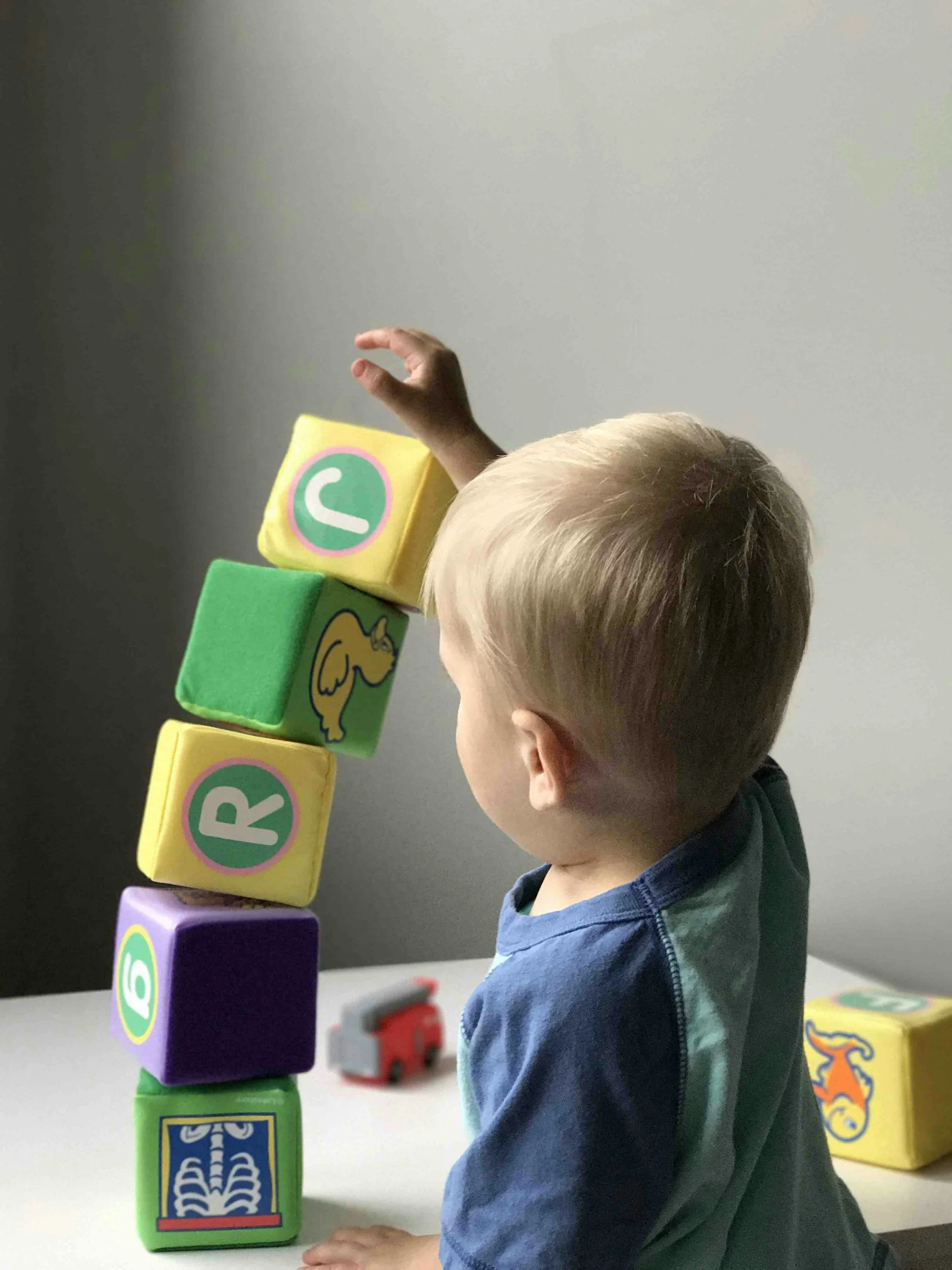
Children generally develop motor skills in a predictable sequence, even if the timing varies from one child to the next. In the early months, babies gain head control, learn to roll and begin to sit. By the end of the first year, many are crawling, pulling to stand and starting to grasp objects between thumb and finger. The toddler years bring walking, running and the first attempts at scribbling and stacking blocks. As children move towards the preschool years, they refine these abilities, learning to hop, climb stairs with alternating feet, draw simple shapes and use scissors with growing control.
It is important to remember that these are guides rather than strict deadlines. Children are individuals, and a few weeks either side of a typical milestone is rarely cause for concern. What matters more is steady, ongoing progress and a child's ability to participate happily in everyday activities.
While every child develops at their own pace, certain patterns are worth noticing. With gross motor skills, you might observe a child who appears unusually clumsy, tires quickly during physical play, avoids climbing or running, has poor balance, or reaches movement milestones noticeably later than peers. Some children seem floppy or low in muscle tone, while others appear stiff or awkward in their movements.
With fine motor skills, signs can include difficulty holding a pencil or crayon, avoiding puzzles, drawing or construction toys, struggling with buttons, zips and cutlery, or showing frustration during tasks that require hand control. A child might also press too hard or too softly when writing, or switch hands frequently well past the age when a hand preference usually settles.
Noticing one or two of these signs is not a diagnosis, but a cluster of them, or a child who is becoming frustrated and avoidant, is a good reason to seek a professional opinion.
When a child needs support with motor development, occupational therapy is often the first port of call. Occupational therapists are skilled at assessing how a child moves and uses their hands, identifying the underlying reasons for any difficulty, and designing playful, goal-directed activities that build strength, coordination and confidence. Because children learn best through play, therapy rarely feels like hard work. Instead it might look like an obstacle course to develop balance, threading beads to refine finger control, or messy, hands-on activities that strengthen the small muscles of the hand.
Where sensory differences affect movement, therapists may also draw on sensory integration approaches to help a child feel more comfortable and regulated in their body. Crucially, occupational therapy also equips parents with strategies to carry over into daily life, so progress made in the therapy room continues at home and at school. At our centre in Al Jaddaf, support is always tailored to the individual child, building on their strengths and interests rather than focusing only on what is difficult.
Parents can do a great deal to nurture motor development through ordinary play. To strengthen gross motor skills, encourage plenty of active movement: climbing at the park, kicking and throwing balls, dancing to music, balancing along low walls, and animal walks such as crawling like a bear or hopping like a frog. Active play in Dubai's cooler morning hours or in indoor play spaces during the summer months keeps children moving safely all year round.
To support fine motor skills, offer activities that exercise little hands: playdough and clay, threading pasta onto string, building with small blocks, doing puzzles, tearing and sticking paper, and using child-safe scissors and tweezers. Everyday routines help too, so let your child practise pouring, using cutlery, doing up their own buttons and helping in the kitchen. Keep these moments light and encouraging, celebrating effort rather than perfection, and step back when frustration builds so that learning stays joyful.
At what age should I be concerned about motor delays?
There is no single cut-off, because children develop at different rates. If your child is consistently behind on several milestones, regressing, or struggling to join in everyday activities, it is wise to seek advice rather than wait and see.
Can fine and gross motor difficulties affect schoolwork?
Yes. Fine motor challenges can make handwriting, cutting and other classroom tasks tiring or frustrating, while gross motor difficulties can affect a child's confidence in sport and play. Early support helps prevent these challenges from affecting learning and self-esteem.
Are motor difficulties always linked to a wider condition?
Not at all. Many children simply need a little extra practice and support. In some cases, motor differences relate to conditions such as dyspraxia, but an assessment is the only way to understand the full picture.
How long does occupational therapy take to show results?
Every child is different. Some show progress within a few weeks, while others need longer-term support. Consistency at home alongside therapy usually leads to the best outcomes.
Is it ever too late to work on motor skills?
No. While the early years are especially important, children continue building motor abilities throughout childhood, and well-targeted support can help at any stage.
Motor skills are about far more than movement. They give children the freedom to explore, the independence to manage daily tasks, and the confidence to join in with friends. If you have noticed that your child finds certain movements tricky, trust your instincts and reach out, because timely, encouraging support can transform frustration into achievement.
Our warm and experienced team in Al Jaddaf is here to help your family every step of the way. To arrange an assessment or simply ask a question, contact us on +971 52 600 4107 or bloom@bloombeyond.me, or visit us at 601, 602 & 701 Al Nastaran Tower, Al Jaddaf Waterfront, Dubai. With the right support at the right time, every child can move, play and grow with confidence.



.png)

.png)

.png)
.png)
.png)
.png)