Every parent wants their child to grow, learn, and thrive. But when everyday tasks like holding a pencil, getting dressed, or playing with other children feel unusually difficult for your child, it can be both confusing and worrying. The good news? These challenges often have a clear cause, and with the right support, incredible progress is possible.
Occupational therapy (OT) is one of the most effective, evidence-based interventions available for children who face difficulties with daily activities, sensory processing, coordination, or social skills. At Bloom Beyond, Dubai's top-rated mental wellness and rehabilitation center, our specialist occupational therapists work with children every day helping them build the skills they need to move through the world with confidence and independence.
In honor of this week's global focus on child development awareness, we're sharing seven of the most common signs that your child may benefit from occupational therapy, along with what you can expect from OT at Bloom Beyond.
Occupational therapy for children focuses on helping them develop, recover, or maintain the skills needed for daily life what therapists call "occupations." For a child, those occupations include playing, learning, self-care, and socializing.
A pediatric occupational therapist evaluates how a child's physical, cognitive, sensory, and emotional development impacts their ability to participate fully in everyday activities. They then design a personalized therapy plan to target those specific gaps.
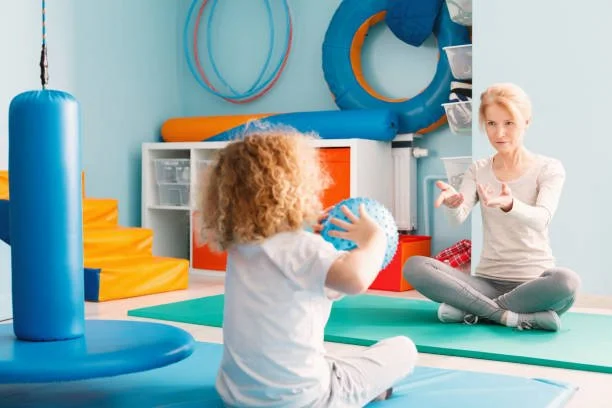
At Bloom Beyond, our OT team uses scientifically-backed, play-based methods that make sessions engaging for children while delivering measurable results.
If your child struggles to hold a crayon, use scissors, button their clothes, or tie their shoes, this may indicate a fine motor delay. These challenges can affect school performance and self-confidence. OT directly addresses fine motor development through targeted, playful activities.
Does your child cover their ears at normal sounds, avoid certain textures, or conversely, constantly seek out intense sensory input like spinning or crashing into things? Sensory processing differences are extremely common and highly responsive to OT intervention.
Children who resist or struggle with brushing teeth, bathing, dressing, or eating may not just be being "difficult" — they may have underlying sensory, motor, or executive function challenges. OT helps children build independence in these everyday routines.
If your child has significant difficulty sitting still, following multi-step instructions, or staying focused on tasks appropriate for their age, an occupational therapist can assess whether sensory or neurological factors are contributing — and design strategies to help.
Handwriting requires a complex combination of fine motor control, visual-motor integration, and postural stability. Children who are significantly behind peers in writing legibly may benefit greatly from OT support before these gaps widen.
Difficulty understanding how to play with peers, take turns, read social cues, or manage emotions during group activities can all be addressed through OT, often in coordination with our behavioral therapy and psychology teams at Bloom Beyond.
Frequent clumsiness, difficulty learning to ride a bike, poor balance, or avoiding physical activities may point to developmental coordination disorder (DCD) a condition where OT can make a profound difference.
At Bloom Beyond, every child's journey begins with a comprehensive, individualized assessment. Our therapists take time to understand your child's unique strengths and challenges before designing a tailored therapy plan.
Our OT sessions are:
Play-based and child-led — therapy doesn't feel like work to your child
Evidence-based — grounded in the latest research in pediatric development
Family-centered — we work closely with parents and caregivers to extend progress at home
Collaborative — our OT team works alongside our psychologists, speech therapists, and behavioral therapists for holistic care
We also offer specialized training for parents and caregivers, so you feel empowered and equipped to support your child's development between sessions.
If you've recognized one or more of the signs above in your child, trust your instincts. Early intervention leads to significantly better outcomes. There's no need to wait for a diagnosis — you can request an assessment at Bloom Beyond directly.
Our team will guide you through the process, answer all your questions, and provide clear, compassionate recommendations based on your child's needs.
Occupational therapy is not just for children with a formal diagnosis, it's for any child whose quality of life, learning, or daily functioning could be improved with skilled, personalized support. At Bloom Beyond, we believe every child deserves the opportunity to bloom.
If you're based in Dubai or the UAE and you're wondering whether OT might be right for your child, we'd love to hear from you. Book a consultation with our occupational therapy team today and take the first step toward a brighter, more independent future for your child.



.png)

.png)

.png)
.png)
.png)
.png)