Dyspraxia — known clinically as Developmental Coordination Disorder (DCD) — is a difficulty with planning and carrying out physical movements, and studies estimate it affects around 5–6% of school-aged children. A child with dyspraxia is not being careless or lazy; their brain simply finds it harder to organise the sequence of movements needed for everyday tasks such as dressing, catching a ball or forming letters. If your child is persistently clumsy, avoids physical play, or struggles with self-care well beyond what you would expect for their age, the recommended next step is an occupational therapy assessment. Support for children with coordination difficulties is available at Bloom Beyond Enabling in Al Jaddaf, Dubai.
Most parents have a moment of quiet worry about it. Your child trips over nothing. They knock over their juice at every meal. They are the last one still fumbling with their shoes at the nursery door, and the one who hangs back at the edge of the football pitch. You have probably been told they will grow out of it — and many children do. But when clumsiness persists, and when it starts to shape what your child is willing to try, it deserves a closer look.
Dyspraxia is a difficulty with motor planning — the brain's ability to work out how to move, sequence that movement, and carry it out smoothly and automatically. Most of us never think about how to fasten a button; the pattern is stored and runs on autopilot. For a child with dyspraxia, that automation does not happen easily, so every attempt feels like a first attempt. It is exhausting.
It is not a problem with muscle strength, and it is not caused by a lack of effort — these children usually practise more than their peers, not less. Nor is it an intellectual difficulty: many children with excellent verbal reasoning struggle enormously with a pair of scissors. Dyspraxia frequently travels alongside attention difficulties, autism and sensory processing differences, which is why a good assessment looks at the whole child rather than the motor skills alone.
What dyspraxia looks like changes as a child grows, which is one reason families in Dubai often notice it in stages rather than all at once.
In toddlers and preschoolers, you might see late or unusual crawling, difficulty with stairs, frequent falls on flat ground, a dislike of climbing frames, trouble with puzzles, and resistance to using cutlery.
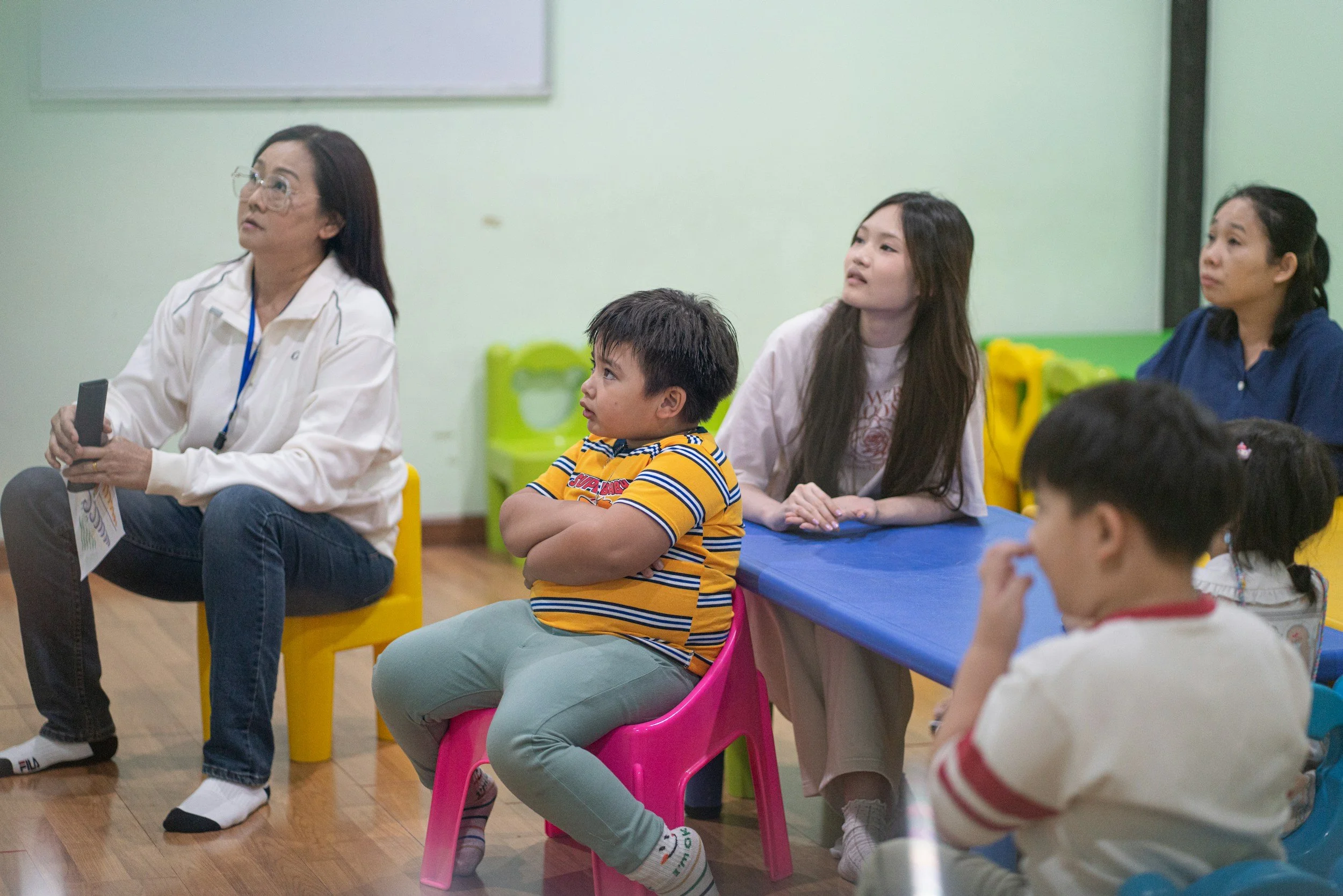
In the early school years, the picture shifts towards the classroom. Handwriting is slow, effortful and messy. Scissors are a battle. Getting changed for PE takes far longer than it should, and your child may bump into things, misjudge distances, and struggle to catch or kick a ball.
In older children, coordination difficulties often look like disorganisation: forgotten bags, chaotic desks, written work that does not reflect what the child clearly knows, and sport quietly avoided. By this age the emotional layer is usually most visible — frustration and comments such as "I'm just rubbish at everything."
A single sign means very little on its own. It is the pattern — persistent, present across settings, and out of step with same-age peers — that matters.
Dyspraxia has no obvious outward marker, the child is usually articulate and engaged, and because these children are rarely disruptive they do not attract attention in a busy classroom. There is also a strong pull towards "wait and see". Meanwhile the child is quietly drawing a conclusion of their own: that some things are simply not for them.
That is where the real cost sits. Research consistently links unsupported coordination difficulties with lower participation in physical activity, reduced self-esteem, and higher rates of anxiety in adolescence. The motor difficulty itself is very manageable; the withdrawal that grows around it is much harder to undo later.
Occupational therapy is the primary intervention for coordination difficulties, and it is far more targeted than "extra practice". A therapist begins with a structured assessment: standardised motor testing, observation of your child performing real tasks, and a conversation with you about what daily life actually looks like at home and at school.
Therapy then works on three fronts. The first is building the underlying foundations — core stability, postural control, hand strength and body awareness — because a child cannot control their hands well if their trunk is working hard just to stay upright. The second is task-specific teaching, breaking a skill such as tying laces or forming letters into explicit, verbally cued steps until it becomes automatic. The third is adapting the environment: a sloped writing surface, a different pencil grip, elasticated laces, extra time for changing.
Where sensory processing differences are also present, sensory integration work runs alongside the motor programme. If your child's speech is hard to understand as well, a speech therapy assessment is often recommended, since the same motor-planning difficulty can affect the muscles used for speech.
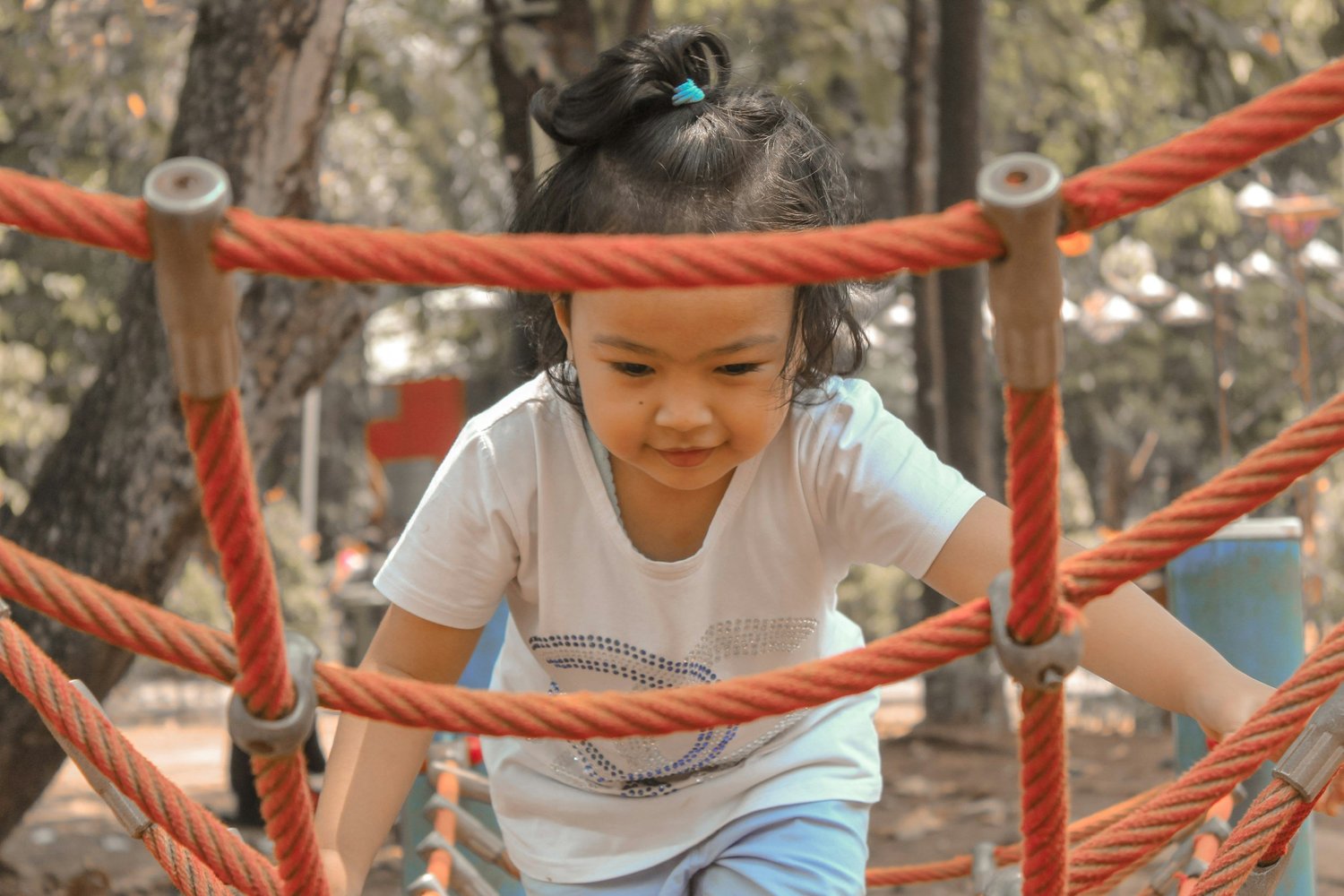
Build strength through play rather than drills. Climbing at one of Dubai's indoor play centres, swimming, scooting outdoors and carrying the shopping all develop core stability without feeling like therapy. Swimming suits these children particularly well and is widely available across the UAE.
Allow more time rather than more help — rushing is the enemy of motor planning, so an extra ten minutes in the morning achieves more than stepping in to do the buttons yourself. Use words to guide movement ("thumb here, now pull it through") so your child has a script they can eventually run internally. And protect their confidence: praise the effort rather than the result, and keep one physical activity in their week that they genuinely enjoy.
Will my child grow out of dyspraxia?
No, not entirely — it is a lifelong difference rather than a delay that resolves on its own. With the right support, however, children learn strategies and become genuinely skilled at the tasks that matter to them, and many adults with dyspraxia function without noticeable difficulty.
Is dyspraxia the same as just being clumsy?
Not quite. All children are clumsy at times, but dyspraxia is persistent, present across different settings, out of step with a child's age, and significant enough to interfere with schoolwork, self-care or play.
At what age can dyspraxia be identified?
Usually from around age five, because motor skills vary widely in younger children and a diagnosis requires that difficulties are not simply down to inexperience. A therapist can assess and support a younger child well before any diagnostic label is considered.
Does dyspraxia affect intelligence?
No. It is a motor difficulty with no bearing on intellectual ability — which is precisely why these children's written work so often underrepresents what they know.
Can dyspraxia affect speech as well as movement?
Yes, in some children. Verbal dyspraxia affects the planning of the movements needed for clear speech, and a child may have this alongside, or instead of, difficulties with whole-body coordination.
Where can my child get occupational therapy for coordination difficulties in Dubai?
At Bloom Beyond Enabling, located at 601, 602 & 701 Al Nastaran Tower, Al Jaddaf Waterfront, Dubai. Our occupational therapists assess motor planning, sensory processing and daily living skills, and families from across Dubai and the wider UAE are welcome to book in.
If your child's clumsiness has stopped being a family joke and started to shape what they are willing to attempt, that is reason enough to have it looked at properly. An assessment gives you an answer either way, and starting earlier is always easier than starting later.
Our multidisciplinary team in Dubai offers occupational therapy, speech therapy, ABA therapy and clinical psychology under one roof, so children with overlapping needs are supported by professionals who talk to one another. To arrange an assessment, call +971 4 554 5234 or +971 52 600 4107, email bloom@bloombeyond.me, or visit us at 601, 602 & 701 Al Nastaran Tower, Al Jaddaf Waterfront, Dubai.



.png)

.png)

.png)
.png)
.png)
.png)