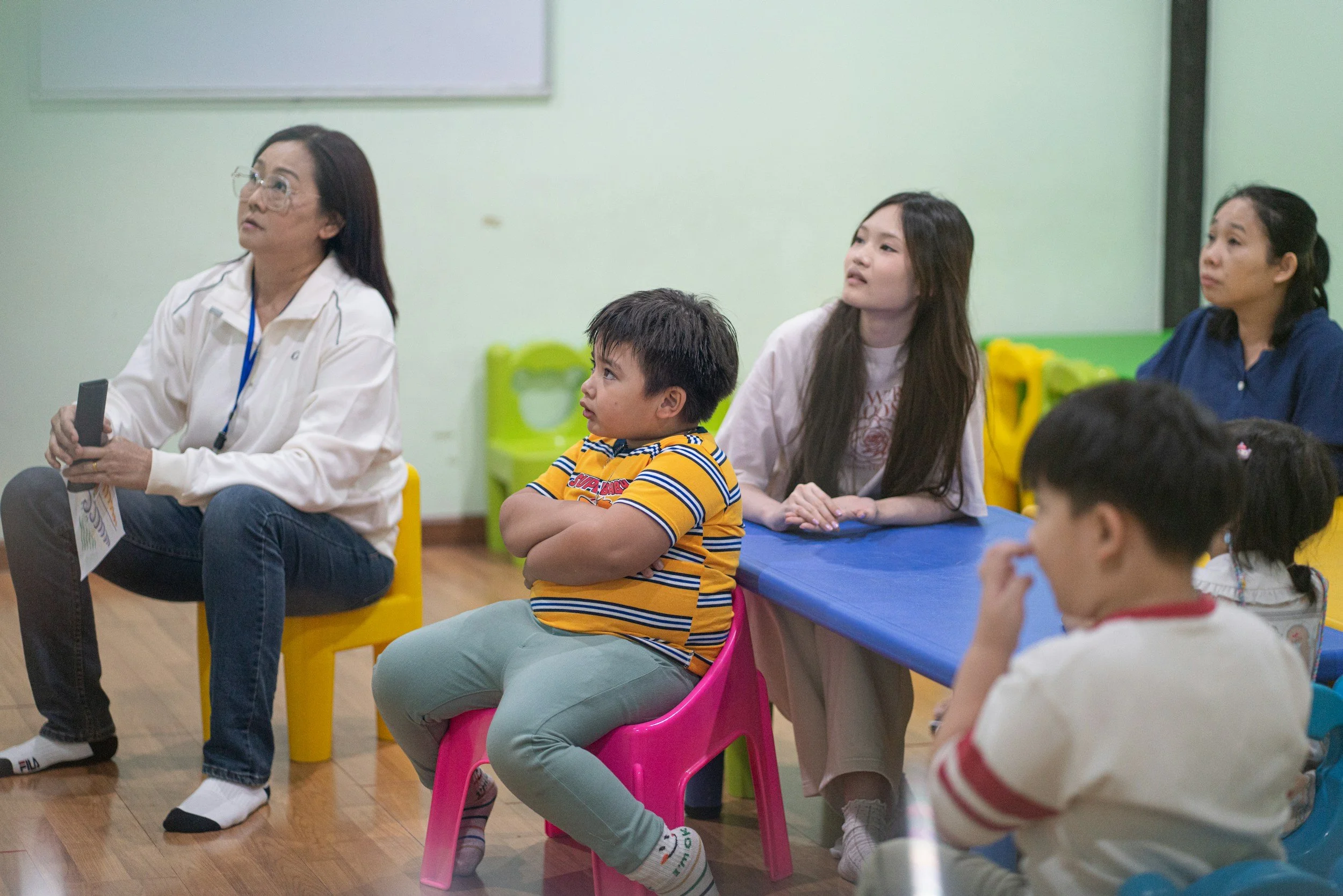
Toe walking is when a child habitually walks on the balls of their feet, with little or no heel contact with the ground. It is a normal experiment for toddlers finding their balance, but toe walking that continues beyond around three years of age — or that a child cannot stop when reminded — deserves a closer look, because it can be linked to sensory processing differences, tight calf muscles, altered muscle tone, or an underlying developmental condition. The recommended next step is a paediatric occupational therapy assessment to identify what is driving the pattern before it becomes fixed. Families in Dubai can arrange this at Bloom Beyond Enabling in Al Jaddaf.
Almost every parent has watched their toddler pad across the living room on tiptoes and thought little of it. But when tiptoe walking becomes a child's default — when they run on their toes at nursery, or cannot walk flat-footed when asked — parents across Dubai start to wonder whether something more is going on.
Most children take their first steps between 10 and 18 months, and many spend some of that period up on their toes. At this stage it is usually intermittent: the child stands flat-footed when still, drops onto their heels when tired, and gradually settles into a heel-to-toe gait as balance matures. This kind of toe walking generally resolves within a few months of walking becoming confident.
It becomes more significant when it persists. Studies estimate that around 2–5% of otherwise typically developing children continue to walk on their toes beyond the age of three, a pattern often described as idiopathic toe walking — meaning no single medical cause can be identified. That term can be reassuring, but it is a diagnosis of exclusion, reached only after a professional has ruled out the explanations below.
Toe walking is a symptom, not a diagnosis, and several very different things produce the same visible pattern.
Habit and motor learning. Some children simply learned to walk this way and never unlearned it, and over time the pattern becomes automatic.
Tight calf muscles or a short Achilles tendon. This can be the original cause or, more often, the consequence. Persistent toe walking shortens the calf over months and years, which makes flat-footed walking genuinely uncomfortable and reinforces the cycle.
Sensory processing differences. For some children the soles of the feet are highly sensitive, and reducing floor contact manages that input. For others the opposite applies: the stretch through the calves provides strong feedback about where their body is in space.
Muscle tone differences. A child with low tone may lock up onto their toes to gain stability, while a child with high tone may find their calves pull them there.
Neurological or developmental conditions. Toe walking can be an early feature of mild cerebral palsy, muscular dystrophy or a tethered spinal cord. It is also seen more frequently in autistic children, though it is far from universal and, on its own, is not a diagnostic sign.
The sensory explanation is the one parents in Dubai hear about least, and often the most useful. A child whose brain registers proprioceptive feedback faintly may seek it out intensely — bouncing, crashing, jumping, and walking on their toes to load the calves and ankles with pressure. Conversely, a child with tactile defensiveness may find sand, tiles or grass unpleasant underfoot and minimise the surface making contact.
Many families notice their child tiptoes far more on certain surfaces, or barefoot but not in shoes. That pattern is a strong clue, and exactly the sort of detail an occupational therapist will ask about during an assessment.
Arrange a professional assessment if your child shows any of the following:
Toe walking that continues consistently beyond the age of three
An inability to stand or walk flat-footed when asked, or visible calf tightness
Toe walking on one side only, which always warrants prompt review
Toe walking that appears or worsens after a period of normal walking
Frequent tripping, falling, or difficulty keeping up with peers physically
Toe walking alongside delayed speech, limited eye contact or restricted play, which calls for a broader developmental review
Leg or foot pain, or reluctance to walk any distance
One-sided toe walking, and any loss of previously acquired skills, should be reviewed by a paediatrician without delay.
Support starts with understanding the cause, which is why assessment matters more than any single exercise. A paediatric occupational therapist will observe your child's gait, test ankle range of movement, screen sensory processing, and look at balance, core strength and motor planning together rather than in isolation.
Treatment typically combines calf and hamstring stretching, strengthening work for the ankles and core, and graded activities that make heel contact rewarding rather than effortful — heel-walking games, walking up slopes, squatting play and obstacle courses. Where sensory seeking drives the pattern, a therapist will build a sensory diet that meets the child's need for deep pressure and movement through more functional routes, so tiptoeing becomes unnecessary. Footwear advice and, occasionally, orthotics or serial casting arranged with an orthopaedic specialist may form part of the plan. Where toe walking sits within a wider autism profile, ABA therapy helps generalise new movement patterns across settings.
Early intervention genuinely changes the picture. A three-year-old with flexible ankles has a far easier path than a nine-year-old whose calves have adapted over six years, so the instinct to wait and see is worth resisting.
Encourage barefoot play on varied surfaces such as sand, grass and cushions to give the feet rich sensory input. Build heel contact into games rather than instructions — walking like a penguin on heels, marching, climbing stairs one foot per step, or crouching to collect toys, which stretches the calves naturally. Choose supportive shoes with a firm heel counter and a flexible sole.
Most importantly, avoid constant correction. Repeatedly telling a child to put their heels down rarely works and often makes them anxious about how they move. If the pattern is driven by tight muscles or sensory need, reminders cannot fix it — targeted therapy can.
Is toe walking always a sign of autism?
No. Most children who walk on their toes are not autistic, and the majority of cases are idiopathic or habitual. Toe walking is more common among autistic children, but it only becomes meaningful alongside other developmental signs such as delayed speech or restricted social interaction.
At what age should I be concerned about toe walking?
Around age three is the usual threshold. Before that, intermittent toe walking is generally part of normal motor development; after that, a persistent pattern — or an inability to stand flat-footed at any age — is worth assessing.
Can toe walking be corrected without surgery?
Yes, in the great majority of cases. Most children respond well to stretching, strengthening, sensory support and gait retraining. Surgical lengthening is reserved for a small minority with severe, long-standing contracture that has not responded to conservative treatment.
Will my child simply grow out of it?
Some do, but many do not, and waiting carries a cost. Persistent toe walking can lead to shortened calf muscles, ankle stiffness, balance difficulties, foot pain and reduced participation in sport and PE.
Where can my child get an occupational therapy assessment in Dubai?
At Bloom Beyond Enabling, located at 601, 602 & 701 Al Nastaran Tower, Al Jaddaf Waterfront, Dubai. Our paediatric occupational therapists assess gait, muscle tone, sensory processing and motor planning together, and families across Dubai and the wider UAE are welcome to enquire.
If your child is walking on their toes and you are unsure whether it needs attention, a short assessment will give you a clear answer rather than another year of wondering. Our team provides occupational therapy, speech therapy, ABA therapy and clinical psychology for children across Dubai. To arrange an assessment, call +971 4 554 5234 or +971 52 600 4107, email bloom@bloombeyond.me, or visit us at 601, 602 & 701 Al Nastaran Tower, Al Jaddaf Waterfront, Dubai.



.png)

.png)

.png)
.png)
.png)
.png)