Scissor difficulty means a child finds it hard to hold, open, close and steer scissors to cut paper accurately. It is common and usually reflects developing hand strength, coordination or visual-motor skills rather than lack of effort. The best next step is playful practice at home and, if you remain concerned, a professional assessment; support is available at Bloom Beyond Enabling in Al Jaddaf, Dubai, through our occupational therapy service.
Many parents in Dubai and across the UAE notice scissors for the first time when a nursery or school craft activity comes home half-finished, or when a teacher mentions that cutting is tricky. It can be worrying to watch your child grow frustrated, tear the paper instead, or give up altogether. The good news is that cutting is a skill built from smaller steps, and each of them can be strengthened through everyday play.
Using scissors looks simple, but it asks a child's body and brain to do several things at once. One hand opens and closes the scissors using a small, controlled movement of the thumb and fingers. The other hand must hold and turn the paper. Both hands need to work together, which is called bilateral coordination, while the eyes follow the line being cut.
The child also needs a stable shoulder, wrist and trunk so that the fingers can move without the whole arm wobbling. If any one of these areas is still developing, cutting can feel exhausting or confusing, and children may avoid it.
There is rarely a single cause. Possible contributing factors include weaker hand muscles, difficulty using the two sides of the body together, limited visual-motor integration (matching what the eyes see with what the hands do), low postural stability, or differences in sensory processing. Some children also find the pressure and vibration of the tool uncomfortable.
It is worth remembering that children with these differences are not being lazy or careless. They are often working much harder than their peers to complete the same task. A professional can help work out which factors apply to your child.
Children develop at different rates, so ages are a guide rather than a deadline. The CDC's updated 2022 milestone checklists list skills that at least 75 per cent of children are expected to show by a particular age, which is a helpful reminder that a range is normal. In general, many children begin snipping paper in the toddler years, then progress to cutting along a straight line, then curves and simple shapes in the preschool years.
If your child is well beyond these stages and is also finding other fine motor tasks hard, such as dressing, drawing or using cutlery, a conversation with a professional is worthwhile.
Start before the scissors come out. Activities that strengthen the hands and fingers lay the foundation:
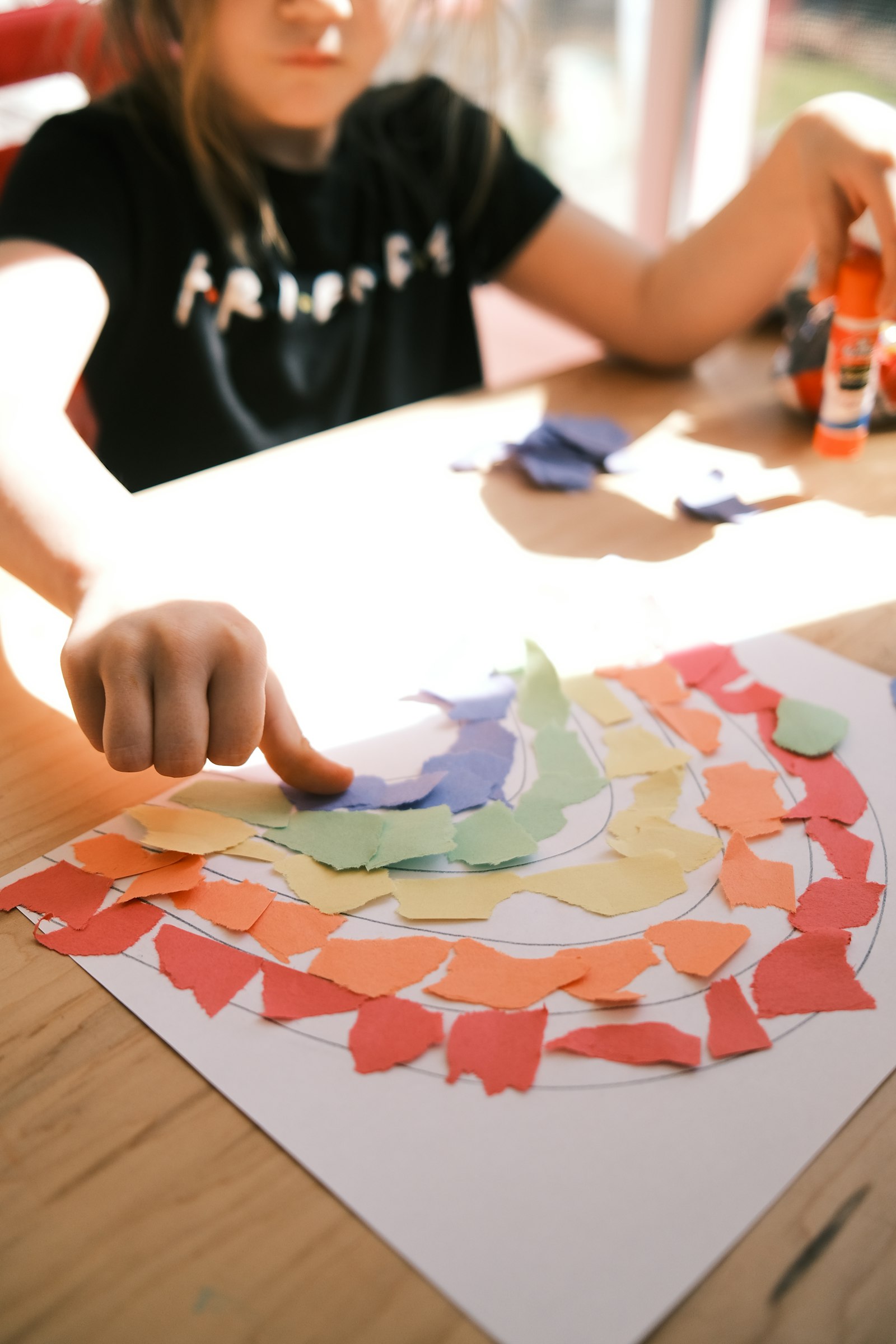
Squeezing playdough, clay or sponges, tearing paper into strips, using tongs or tweezers to move pom-poms, pegging washing onto a line, and spraying water bottles all build the small muscles needed for cutting.
When you move to scissors, begin with snipping thin card or strips of paper, which is easier than cutting thin paper. Draw a bold line and ask your child to cut along it, then progress to curves, zigzags and simple shapes. Encourage the thumb-up position, with the paper held by the helper hand, and keep sessions short and fun.
Seating also matters. A child who sits with feet supported and elbows resting on a table at a comfortable height has a more stable base for fine movements.
Consider an assessment if your child avoids cutting and other fine motor activities, becomes very distressed, grips the scissors with their whole fist well beyond the preschool years, or cannot hold the paper with the other hand. Concerns from teachers are also worth taking seriously.
An occupational therapist looks at the whole picture, including strength, coordination, sensory processing and posture, then builds a play-based plan with you. Early support often makes everyday tasks easier and helps children feel more confident at nursery and school in Dubai. You can read more about our approach on our occupational therapy page, and if your child has wider concerns about behaviour or focus, our clinical psychology team may also be able to help.
Yes, it is very common, because cutting is a complex skill that needs strength, coordination and visual attention all working together. Most children improve with regular, playful practice, but if progress seems stalled, an occupational therapy assessment can help identify why.
There is a wide range, but many children begin snipping paper in the toddler years and cut along lines and simple shapes in the preschool years. Because every child develops at their own pace, a professional in Dubai can advise if you are unsure whether your child is on track.
Not on its own. Scissor difficulty can appear alongside conditions such as developmental coordination difficulties, but it is also common in children with no diagnosis. Only a qualified professional can assess this, so please avoid self-diagnosing.
Sometimes, yes. Child-sized, loop or spring-assisted scissors can make early practice easier, and a therapist can recommend what suits your child. The right tool helps, but strength and coordination matter more than equipment.
Often yes. Left-handed scissors are designed so the child can see the cutting line, which makes cutting easier. Your therapist can check which hand your child prefers before you buy.
Bloom Beyond Enabling offers occupational therapy for children at 601, 602 & 701 Al Nastaran Tower, Al Jaddaf Waterfront, Dubai. Our team can assess your child's hand skills, discuss your concerns and build a home practice plan with you.
If you are worried about your child's cutting or fine motor skills, we would be glad to help. Please call +971 4 554 5234 or +971 52 600 4107, email bloom@bloombeyond.me, or arrange an assessment online. You will find us at 601, 602 & 701 Al Nastaran Tower, Al Jaddaf Waterfront, Dubai.