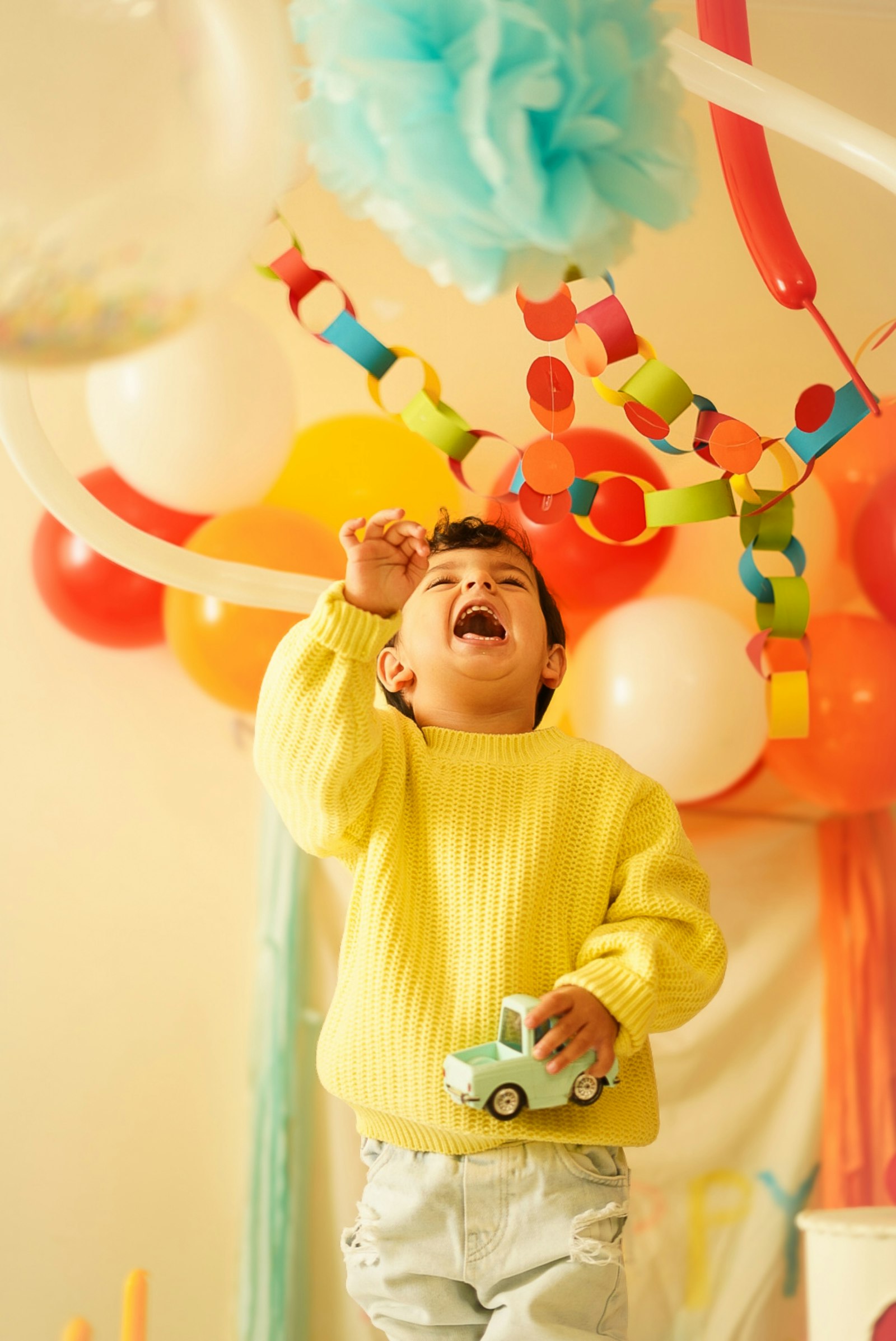
Birthday parties can overwhelm a child because they combine loud noise, crowds, bright decorations, unfamiliar food and unpredictable social demands all at once. For children who process sensory information differently, this sensory overload can lead to tears, hiding, or running away. A professional assessment can show what is behind the reactions, and support with occupational therapy is available at Bloom Beyond Enabling in Al Jaddaf, Dubai.
Birthday parties are meant to be joyful, yet many parents in Dubai quietly dread them. Your child may cover their ears during the singing, refuse to enter the room, or melt down when the balloons pop. These reactions are not bad behaviour. They are usually a sign that the child's nervous system is working very hard to cope.
A party is one of the most sensory-rich environments a child will encounter. Music, shouting, flashing lights, soft-play echo, strong food smells and sudden surprises such as party poppers all compete for attention. Children who are sensitive to sound, light or touch may find the whole experience painful rather than fun.
Social demands add another layer. Children are expected to share, wait, take turns, make small talk and cope with winning or losing games. For a child who finds social situations tiring, that is a great deal to manage in a short time.
Every child shows stress differently. Common signs include covering the ears, clinging to a parent, going quiet, becoming unusually silly or hyperactive, refusing food, or suddenly crying or lashing out. Some children cope at the start and then fall apart an hour later once their reserves run out.
Some children also seek out more sensory input, such as running, crashing into others or grabbing everything in sight. This can be another sign of a child trying to regulate an overwhelming environment. Noticing the pattern across several events matters more than any single party.
Preparation is often the single most helpful step. Show your child photos of the venue and the host, and explain who will be there and what will happen. A simple picture schedule, such as arrive, play, cake, go home, makes the unknown predictable. Children who benefit from this kind of structure often respond well to visual supports used in behaviour therapy.
Practise key moments at home too. Sing the birthday song at a low volume, rehearse blowing out a candle, and role-play saying "I need a break". Agree on a signal your child can use when they want to leave.
Small adjustments can make a big difference. Arrive early, before the crowd builds, so your child can explore the space calmly. Bring ear defenders or noise-reducing headphones, a favourite snack, and a comfort item. Ask the host whether there is a quieter room where your child can retreat.
You do not need to stay for the whole event. Leaving after the cake, on a good note, is far better than staying until your child is exhausted. If you host in Dubai yourself, consider a smaller guest list, shorter timing, softer music and a calm corner with books or building blocks.
Occasional discomfort at big events is common in early childhood. It is worth seeking an assessment if your child's reactions are intense, happen in many everyday settings, or stop the family joining in social life. The Centers for Disease Control and Prevention estimated in 2025 that about 1 in 31 eight-year-old children in the United States were identified with autism, and sensory differences are common in autistic children, though they also occur in children without autism.
An occupational therapist can assess how your child processes sensory information and build a plan to help them cope. Where language or social understanding is also a concern, speech therapy can help, and if worry or low mood is involved, clinical psychology offers further support. Only a qualified professional can say what is behind your child's difficulties, so please avoid self-diagnosis.
Yes, many children find parties tiring. Noise, crowds and social pressure are demanding, so occasional discomfort is common. If it is severe or happens often, an assessment is a sensible next step.
No, you do not have to. It is fine to choose events carefully, attend for a short time, or say no. Gradual, positive experiences usually work better than forcing a child to stay.
Yes, many children become more comfortable with the right support and practice. Progress varies from child to child, so a professional can set realistic goals for yours.
Often, yes. They can reduce the intensity of loud noise and help a child feel in control. Introduce them at home first so they feel familiar.
Bloom Beyond Enabling offers occupational therapy for children at 601, 602 & 701 Al Nastaran Tower, Al Jaddaf Waterfront, Dubai. Our team supports families across Dubai with sensory and developmental concerns.
If birthday parties and other busy places are difficult for your child, we would be glad to help. Call +971 4 554 5234 or +971 52 600 4107, email bloom@bloombeyond.me, or visit us at 601, 602 & 701 Al Nastaran Tower, Al Jaddaf Waterfront, Dubai, and arrange an assessment for your child. Families across Dubai and the wider UAE are welcome.