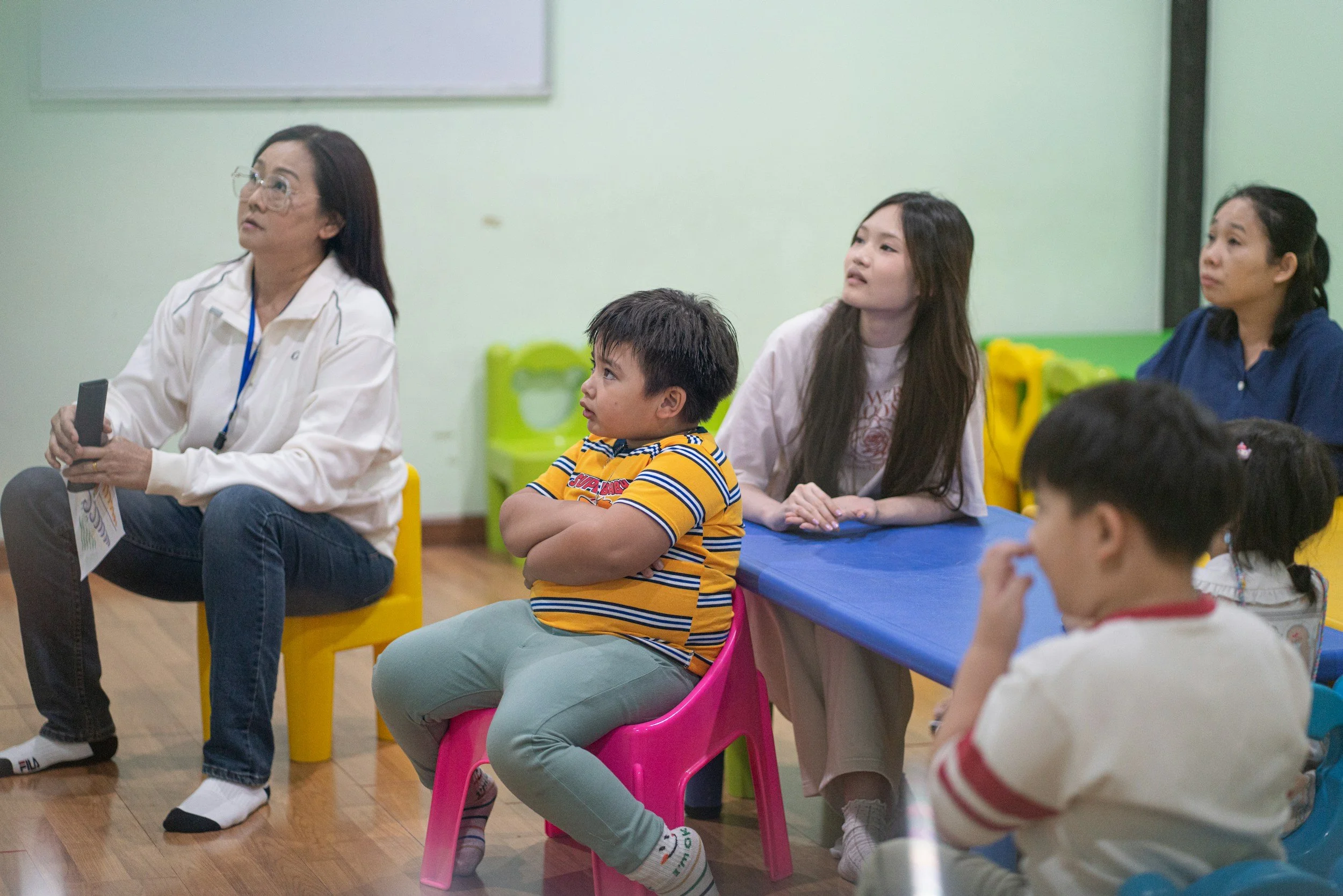
Every child grows at their own pace, and there is a wide, wonderful range of what counts as typical development. Yet as a parent, you know your child better than anyone, and it is natural to notice when something feels a little different. Recognising the early signs of autism spectrum disorder (ASD) is not about labelling a child or jumping to conclusions. It is about staying attentive, asking questions, and, where helpful, seeking gentle guidance early. In Dubai, a growing number of families are learning that early awareness opens the door to support that can shape a child’s confidence, communication and connection for years to come.
This guide is written for parents across the UAE who want to understand what to look out for, when to seek advice, and how early intervention can help their child flourish.
The first few years of life are a period of remarkable brain development. During this window, children build the foundations of language, social understanding, play and emotional regulation. When a child shows signs of autism, recognising them early means support can begin while these foundations are still forming, which is precisely when the brain is most adaptable.
Early intervention does not aim to change who a child is. Instead, it helps a child develop skills for communicating their needs, engaging with others and navigating everyday situations with less frustration. For many families in Dubai, understanding a child’s profile early also brings relief and clarity, replacing worry with a practical plan and a sense of direction.
Autism presents differently in every child, which is why it is described as a spectrum. Some signs may appear in infancy, while others become clearer as a child approaches their second or third birthday. The following are common areas parents notice, though the presence of one or two does not mean a child is autistic.
In the area of social communication, you might notice limited eye contact, few facial expressions directed at others, or a child who does not respond consistently to their own name by around 12 months. Some children may not point to share interest, such as pointing at an aeroplane to show a parent, or may not bring objects over to show them.
In language development, delays in babbling, first words or short phrases can be an early indicator. Some children develop words and then appear to lose them. Others may repeat phrases from cartoons or conversations, known as echolalia, without using them to communicate directly.
In the area of play and behaviour, you might observe a strong preference for lining up toys rather than playing imaginatively, intense focus on particular objects, or distress when routines change. Repetitive movements such as hand-flapping, rocking or spinning are also common, as are strong reactions to sounds, textures, lights or tastes.
It is worth remembering that many toddlers show some of these behaviours from time to time. What tends to matter is the overall pattern, how persistent the behaviours are, and whether they affect a child’s ability to connect and communicate.
Parents often sense that something is different long before a formal conversation takes place. You may find yourself comparing your child to siblings or to other children at nursery, or noticing that milestones are arriving later than expected. These observations are valuable. Professionals rely heavily on parental insight because you see your child across many settings and moods that a short appointment could never capture.
If you have concerns, keeping a simple record can help. Noting when your child reached certain milestones, how they respond to their name, how they play, and how they cope with change gives a clinician a much fuller picture. In Dubai, where families come from many cultural and linguistic backgrounds, it is also helpful to remember that growing up with more than one language does not cause autism, nor does it explain away genuine developmental differences.
Taking the step to speak with a professional can feel daunting, but the process is designed to be supportive rather than intimidating. A developmental assessment usually involves a combination of parent interviews, structured observation of your child at play, and standardised tools that help build a clear understanding of your child’s strengths and challenges.
If a diagnosis of autism is confirmed, it becomes a starting point rather than a full stop. A tailored plan may draw on several therapies. Applied Behaviour Analysis (ABA) supports the development of communication, social and daily-living skills through structured, encouraging teaching. Speech and language therapy helps children express themselves and understand others. Occupational therapy and sensory integration support fine motor skills, self-care and the ability to manage a busy sensory world. Clinical psychology offers emotional support for both the child and the wider family.
Not every child needs every therapy. The most effective plans are individualised, adjusted over time, and built around a child’s particular profile and family goals.
Dubai has developed a strong network of therapy and wellness services for children, and families no longer need to travel abroad to access high-quality, multidisciplinary care. Centres in areas such as Al Jaddaf bring together specialists across ABA therapy, speech therapy, occupational therapy, sensory integration and clinical psychology under one roof, which makes coordinated care far easier for busy parents.
When choosing where to seek support, look for a team that listens carefully, explains things clearly, involves you as a partner, and sets goals that are meaningful to your family’s daily life. The right environment should feel warm and reassuring for both you and your child.
At what age can autism be identified?
Signs can sometimes be observed before a child’s first birthday, and a reliable assessment is often possible from around 18 to 24 months. That said, autism can be identified at any age, and older children and even teenagers can benefit greatly from support.
Does having a few of these signs mean my child is autistic?
Not necessarily. Many young children show some of these behaviours as part of typical development. It is the overall pattern, persistence and impact on communication and daily life that matter, which is why a professional assessment is so valuable.
Will early intervention cure autism?
Autism is not an illness to be cured; it is a different way of experiencing the world. Early intervention focuses on building skills, reducing frustration and helping a child thrive as their authentic self.
Can bilingualism cause or worsen autism?
No. Growing up with more than one language, which is common across the UAE, does not cause autism. Children on the spectrum can and do learn multiple languages with the right support.
Where do I start if I have concerns?
A good first step is to write down what you have noticed and speak with a professional who can carry out a developmental assessment and guide you through the options available in Dubai.
Noticing that your child may need extra support is not a cause for fear; it is an act of love and attentiveness. With early recognition and the right team beside you, your child has every opportunity to grow in confidence, communication and joy. If you have questions or would like to arrange an assessment, our compassionate team is here to help.
To speak with us, call +971 52 600 4107, email bloom@bloombeyond.me, or visit us at 601, 602 & 701 Al Nastaran Tower, Al Jaddaf Waterfront, Dubai. We would be glad to support your family, one gentle step at a time.


.png)

.png)

.png)
.png)
.png)
.png)