Buttoning a shirt, holding a pencil, opening a lunchbox, threading a bead — the small movements of childhood are anything but small in importance. Fine motor skills, the coordinated use of the hands and fingers, underpin a child's independence at home and success at school. For parents in Dubai preparing children for nursery or school, understanding how these skills develop — and how to nurture them through everyday play — is one of the most practical investments you can make. This guide explains what to expect at each age, fun activities that build strength and control, and when extra support from an occupational therapist may help.
Fine motor skills involve the precise movements of the fingers, hands and wrists, working together with the eyes — what specialists call hand-eye coordination. They sit alongside gross motor skills, the large movements of the arms, legs and trunk, and the two develop hand in hand: a child needs a stable core and strong shoulders before their fingers can do delicate work.
These skills matter far beyond the classroom. Feeding with a spoon, brushing teeth, zipping a jacket, turning the pages of a book and eventually writing all depend on them. Children whose hands work confidently tend to participate more readily at school, feel more independent, and experience less frustration in daily routines across the UAE's busy family life.
Development follows a broadly predictable path. In the first year, babies progress from swiping at objects to a refined pincer grasp — picking up small items between thumb and forefinger — by around 9 to 12 months. Between one and two years, toddlers stack blocks, scribble with crayons and begin using a spoon. From two to three, children turn single pages, string large beads and imitate drawing lines and circles. Between three and five, skills accelerate: cutting with child-safe scissors, drawing simple figures, managing large buttons and forming early letters. By school age, most children can write their name, use cutlery and dress themselves with minimal help.
As with all development, the range of "typical" is wide. What matters most is steady progress rather than hitting every milestone on a precise date.
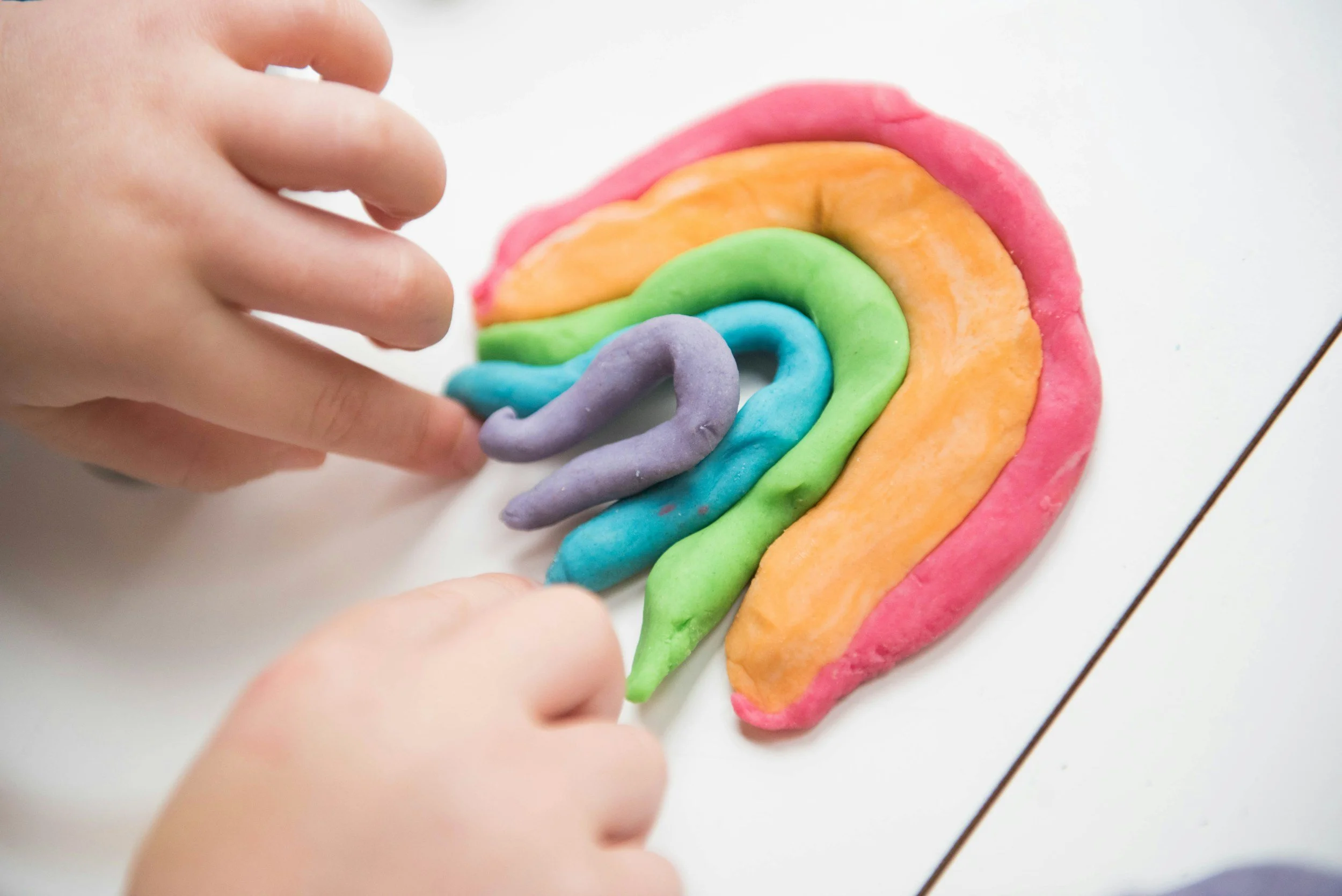
The best fine motor practice rarely looks like practice — it looks like play. Squeezing, rolling and pinching playdough builds hand strength beautifully. Threading pasta onto string, picking up pompoms with tongs or pegging socks on a low washing line develops precision. Water play with spray bottles and sponges strengthens the small muscles of the hand, and is a welcome indoor option during Dubai's hot summer months. Baking together — stirring, kneading, sprinkling — combines strength work with rich sensory experience.
Everyday routines are equally valuable. Letting your child fasten their own buttons, open containers at snack time, pour water from a small jug or help peel fruit takes a little longer, but every attempt is a workout for developing hands. Drawing, colouring and craft activities round out the picture; vertical surfaces such as an easel or paper taped to the wall encourage a strong wrist position that later supports handwriting.
Many parents ask whether tablets help or hinder. Swiping a screen exercises very few of the muscles and movements children need for real-world tasks, and time spent on screens is often time not spent squeezing, building and manipulating. Screens need not disappear entirely, but balance matters: for young children, hands-on play with physical materials remains irreplaceable for motor development. When screens are used, short sessions and shared use with a parent are best.
Consider seeking advice if your child consistently avoids drawing, puzzles or construction toys; uses an awkward or very tight pencil grasp well past age four; struggles with buttons, zips or cutlery compared with peers; switches hands frequently during tasks because of fatigue; presses too hard or too softly when drawing; or becomes frustrated and gives up quickly on hand-based tasks. Difficulties like these can affect confidence long before they affect grades, so early attention pays dividends.
An occupational therapist can assess whether a genuine delay exists and, if so, design playful, motivating therapy that targets the underlying foundations — core stability, shoulder strength, grasp patterns and coordination — rather than simply practising the tricky task itself. Therapy sessions look like play to the child, but every activity is chosen with a purpose.
At what age should my child hold a pencil properly?
A mature tripod grasp typically develops between four and six years. Before then, expect a progression through fist and finger grasps — pushing a "correct" grip too early can cause frustration. If an awkward grasp persists into the school years, an assessment can help.
Are fine motor delays linked to other conditions?
Sometimes. Fine motor difficulties can occur on their own, but they may also accompany developmental coordination disorder, autism, ADHD or general developmental delay. An assessment gives a clear picture of what is going on.
My child is left-handed — should I do anything differently?
Support their natural preference rather than changing it. Position paper slightly to their left, seat them where their elbow will not clash with a right-handed neighbour, and consider left-handed scissors.
How much daily practice do fine motor skills need?
Little and often beats long sessions. Ten to fifteen minutes of playful hand activity a day — woven into crafts, cooking or dressing — is plenty for most children.
What happens at an occupational therapy assessment?
The therapist observes your child during play and structured tasks, looks at strength, coordination and daily living skills, and discusses your routines and concerns. You receive clear feedback and a practical plan, whether or not ongoing therapy is recommended.
Strong little hands open the door to big independence — and with playful practice and the right support, every child can make progress. If you have questions about your child's fine motor development, our occupational therapy team in Al Jaddaf would be delighted to help. Call us on +971 52 600 4107, email bloom@bloombeyond.me, or visit us at 601, 602 & 701 Al Nastaran Tower, Al Jaddaf Waterfront, Dubai to arrange an initial consultation.



.png)

.png)

.png)
.png)
.png)
.png)