
Is My Child Just a Late Talker? Understanding Speech Delay in Young Children
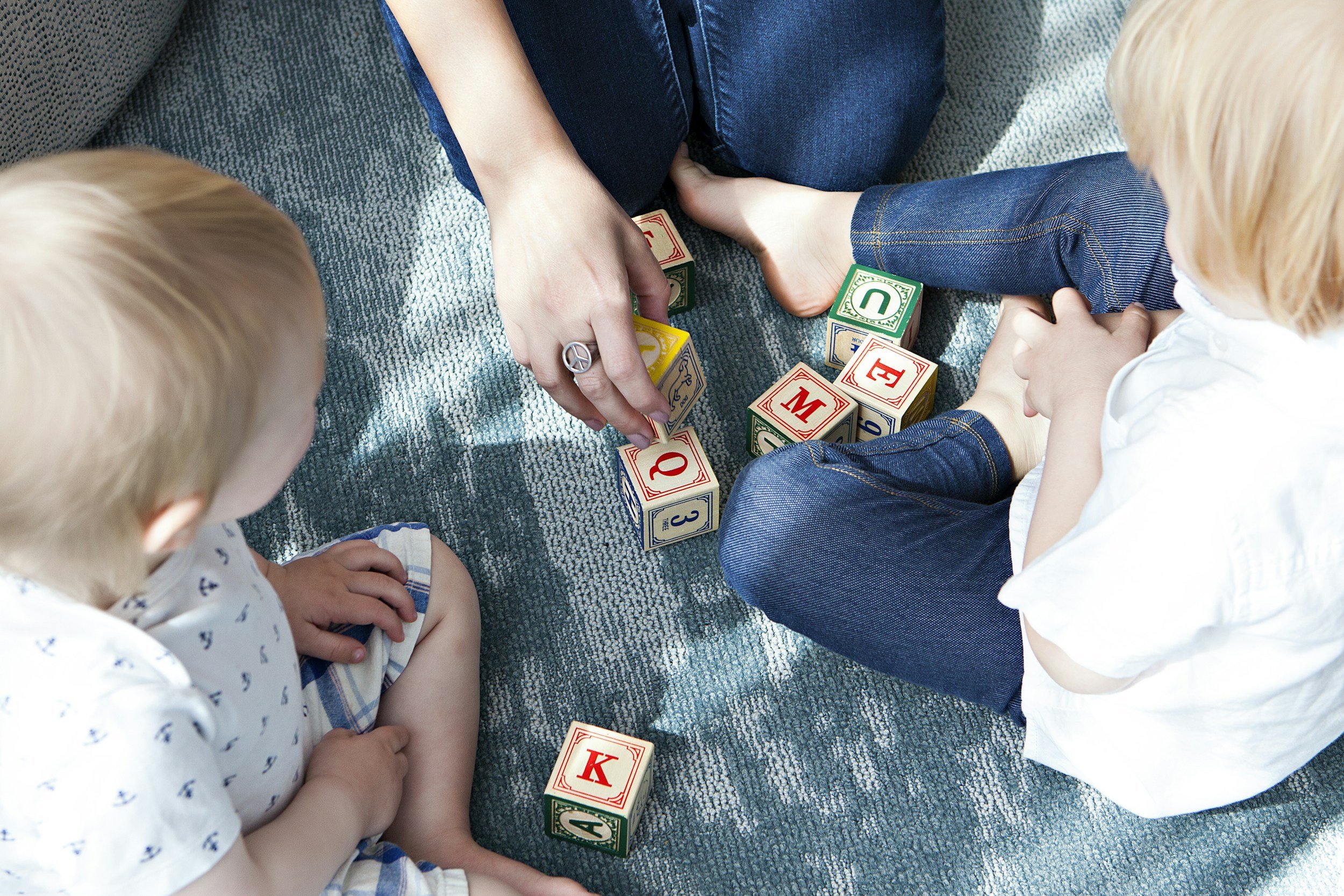
A late talker is a child aged roughly 18 to 30 months who understands what is said to them and is developing typically in every other area, but who uses far fewer spoken words than expected. Many catch up without help, but a significant minority go on to have lasting language difficulties, and the two groups are hard to tell apart by waiting. If your child is approaching two and uses fewer than 50 words, or is not yet joining two words together, the recommended next step is a speech and language assessment rather than another six months of watching. That support is available at Bloom Beyond Enabling in Al Jaddaf, Dubai.
Few worries sit as quietly with parents as a child who is not talking yet. Your child is two, still points, still leads you by the hand to the fridge, and says "mama", "car" and little else. Relatives reassure you he will talk when he is ready — then a nursery teacher in Dubai mentions that she has noticed it too.
What does "late talker" actually mean?
"Late talker" is a description, not a diagnosis. It applies to toddlers whose expressive language — the words they say — lags well behind expectations, while their understanding, play, hearing and social interest look typical for their age.
The benchmarks are straightforward. By around 18 months, most children use roughly 20 words. By their second birthday, most use at least 50 and have started combining two: "more milk", "daddy shoe", "no bath". A child who is two with ten words, or who has single words but has not begun to combine them, sits outside that range. That does not mean something is wrong — it means it is worth looking properly rather than guessing.
Late talker, speech delay or language disorder?
Speech is the production of sounds: a child with a speech sound difficulty may talk constantly yet be hard for anyone outside the family to understand. Language is words and meaning — vocabulary, sentences, comprehension. A late talker has an expressive language delay and is, by definition, a toddler.
Research suggests roughly 15 to 20 per cent of children around age two meet the description of a late talker. Many make up the ground by school age, but a substantial proportion continue to have difficulties later identified as developmental language disorder — difficulties strongly linked with reading, writing and classroom learning. The children who catch up and those who do not look much the same at two, which is why "wait and see" is such an uncomfortable strategy.
Signs that an assessment is worthwhile
Word counts are only part of the picture. These signs prompt a therapist to look more closely:
Fewer than 50 words at 24 months, or no two-word combinations by around 30 months
Not reliably following simple instructions without gestures or context
Little use of gesture: no pointing to share interest, waving or showing you objects
Loss of words or skills previously gained, at any age
Limited interest in other children, reduced eye contact, or repetitive rather than imaginative play
Frustration, tantrums or biting that seem tied to not being understood
Understanding matters more than talking: a quiet child who clearly comprehends everything said to them has a better outlook than one with the same vocabulary who also struggles to follow what is going on. Where limited language sits alongside reduced social interest and repetitive play, an autism-informed assessment may also be recommended — the earlier that picture is understood, the more effective support becomes.
The early years are when the brain builds language networks most readily, and support at two or three usually takes less time than the same support at five or six. In Dubai, where children enter structured nursery settings early and many navigate two or three languages, a gap tends to show up in the classroom quickly.
What therapy actually looks like
Parents often picture a child at a table repeating words. In practice, therapy for a two-year-old looks almost entirely like play.
It starts with an assessment establishing what your child understands, what they can express, how they communicate without words, and whether hearing needs ruling out — which it always should be. Sessions are then built around bubbles, cars, posting toys and books, with the therapist creating small opportunities to communicate and modelling language just above where your child sits. Much of the work happens between sessions, which is why coaching parents is central rather than optional.
Where feeding, oral-motor control or sensory regulation are also involved, occupational therapy runs alongside; where anxiety or emotional regulation form part of the picture, clinical psychology may be added. At our centre those teams share a building and share notes, sparing parents the job of coordinating professionals across Dubai.
What you can do at home, starting today
Narrate rather than quiz. Questions put a child on the spot: "What's this? What colour is it?" Commentary invites them in: "Big red bus. Bus is going. Bus stopped."
Leave the pause. Adults fill silences within a second. Count to five after you speak — many children need that time to assemble a response.
Say it back, plus one. If your child says "car", you say "blue car" or "car go". One extra word offers the next rung on the ladder.
Frequently asked questions
How many words should my two-year-old have?
At least 50, and most two-year-olds have begun combining two words. It is a guide rather than a hard cut-off, but a child noticeably below it at 24 months is worth assessing.
Do late talkers always catch up on their own?
No. Many do, but a substantial minority continue to have language difficulties into the school years, and there is no reliable way to predict which group a toddler belongs to without an assessment.
Does speaking two or three languages at home cause speech delay?
No. Bilingualism does not cause language delay, which matters for the many families across the UAE raising children with several languages. A multilingual child may have a smaller vocabulary in each language, but their total across all languages should fall within the typical range.
Is my child too young for speech therapy?
No — toddlers are ideal candidates. Therapy at this age is play-based and delivered largely through parent coaching, and the earlier it starts, the less intensive it usually needs to be.
Should I have my child's hearing checked first?
Yes. Hearing should be ruled out for any child with delayed speech, including those who seem to hear perfectly well, because intermittent hearing loss from glue ear is common in early childhood and easily missed.
Where can my child get speech therapy in Dubai?
Bloom Beyond Enabling provides speech and language therapy at 601, 602 & 701 Al Nastaran Tower, Al Jaddaf Waterfront, Dubai. Assessments and sessions are available for toddlers through to school-aged children, with occupational therapy, behaviour therapy and clinical psychology in the same centre.
If something about your child's talking has been sitting at the back of your mind, an assessment is the most straightforward way to settle it. Our speech and language therapy, occupational therapy and clinical psychology teams work together under one roof in Dubai. To arrange an assessment, call +971 4 554 5234 or +971 52 600 4107, email bloom@bloombeyond.me, or visit us at 601, 602 & 701 Al Nastaran Tower, Al Jaddaf Waterfront, Dubai.
