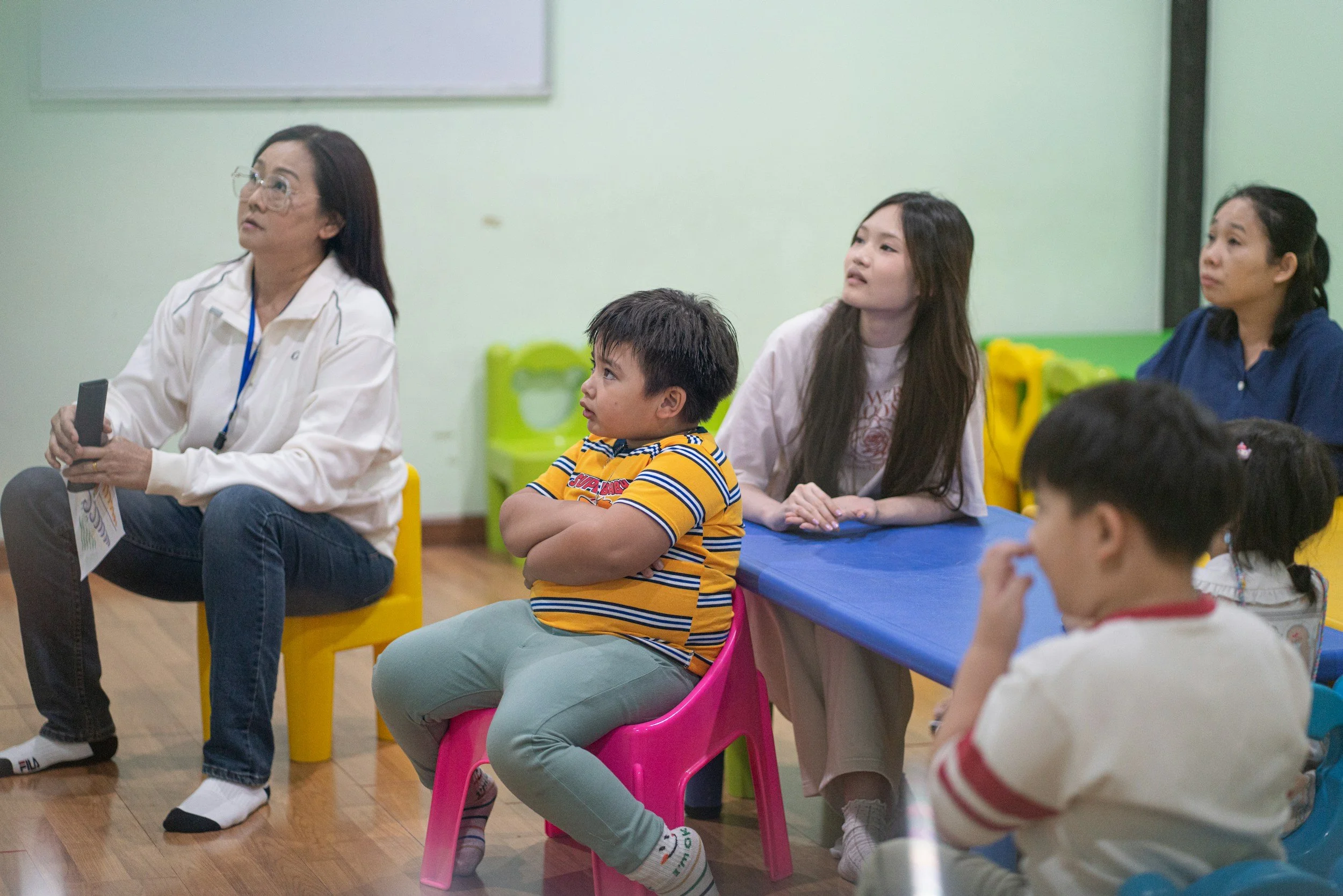

ADHD (attention deficit hyperactivity disorder) is a neurodevelopmental condition affecting how a child regulates attention, impulses and activity levels — not a result of poor discipline or a child simply being lively. The difference between high energy and ADHD lies in consistency and impact: liveliness comes and goes, whereas ADHD traits appear across home, school and social settings and disrupt daily life for six months or more. If that pattern sounds familiar, the recommended next step is a structured assessment with a clinical psychologist. Families in Dubai can arrange one at Bloom Beyond Enabling in Al Jaddaf, where assessment and therapy sit under one roof.
Almost every parent has watched their child bounce around the living room and wondered, privately, whether this is normal. In Dubai, where school days are long and afternoons are often too hot for outdoor play, the question comes up frequently. Children are meant to move, fidget and lose interest in things that bore them — but for some, difficulty with attention is persistent enough to affect learning, friendships and confidence.
ADHD is best understood as a difference in executive functioning — the mental skills that let us hold instructions in mind, resist distraction, plan ahead, wait our turn and shift between tasks. A child with ADHD is not choosing to ignore you or deliberately leaving homework half finished.
Large international reviews estimate that around 5–7% of school-aged children meet the criteria for ADHD, meaning most classrooms in Dubai are likely to include one or two children who experience it. Clinicians describe three presentations: predominantly inattentive, predominantly hyperactive-impulsive, and combined. Which pattern fits your child matters, because the support that helps a restless, impulsive seven-year-old differs from what helps a quiet child who drifts away mid-sentence.
Four questions help parents tell ordinary liveliness from a genuine attention difficulty. Consistency: does it happen everywhere, or only at bedtime? Duration: has it lasted six months or longer, rather than following a house move or a difficult term? Degree: is your child noticeably out of step with peers the same age? Impact: is it getting in the way of learning, friendships or family life?
Behaviours that often prompt a referral include losing belongings repeatedly, forgetting multi-step instructions, careless errors in work the child clearly understands, avoiding sustained mental effort, blurting out answers, interrupting, struggling to stay seated, and appearing not to listen. One or two mean little; a cluster present for months and visible to both parents and teachers is worth investigating.
The stereotype of ADHD is a boy who cannot sit still, and that image causes many children to be missed. Those with the inattentive presentation are described as dreamy, disorganised or simply lazy. They are not disruptive, so they rarely trigger concern in a busy classroom — they quietly fall behind instead.
Girls are often identified later, partly because they mask their difficulties by working extremely hard to keep up, which is exhausting and can spill into anxiety or low self-esteem by the later primary years.
Several other things produce attention difficulties, which is why self-diagnosis from an online checklist is unreliable. Poor sleep is among the most common culprits. Anxiety consumes attention. Undetected hearing loss makes a child appear inattentive. A receptive language difficulty means a child may genuinely not process long verbal instructions. Sensory processing differences can make sitting still in a bright, noisy classroom physically uncomfortable, and these often respond well to occupational therapy.
There is also a regional factor: many children in Dubai and across the UAE learn in two or three languages at once. That cognitive load can resemble distractibility without indicating any disorder at all. A good assessment separates these threads.
A thorough assessment is never a single appointment with a questionnaire. It involves a detailed developmental history from parents, standardised rating scales completed independently by home and school, direct observation, cognitive and attention testing, and a deliberate process of ruling out the alternatives above. Teacher input is essential, since the definition of ADHD rests on difficulties appearing in more than one setting. Where several professionals work together under one roof, the picture is usually clearer and reached more quickly.
ADHD responds well to the right environment and skills training. Behaviour therapy and parent coaching help families build consistent routines, clear expectations and reinforcement that genuinely motivates the child. Occupational therapy supports self-regulation, handwriting endurance and the sensory strategies that make focusing more manageable. Where language processing is involved, speech and language therapy addresses it directly. Many schools in Dubai will put classroom accommodations in place — preferential seating, chunked instructions, extra processing time — once they have a clear report.
Medication is a separate decision made with a paediatrician or psychiatrist, and works best alongside therapy and school support rather than instead of them.
Give one instruction at a time and ask your child to repeat it back. Use a visual schedule for the parts of the day that reliably fall apart. Build movement into homework rather than fighting it — ten minutes of work then a short physical break usually achieves more than an hour of struggle. Protect sleep, since tiredness magnifies every symptom, and praise effort out loud.
Yes. The predominantly inattentive presentation involves no obvious hyperactivity at all, and these children are often quiet, dreamy and easy to overlook. They tend to be identified later, usually when academic demands increase.
ADHD is most reliably identified from around six years of age. Younger children can certainly be assessed and supported, but because high activity and short attention spans are developmentally normal in the preschool years, clinicians are appropriately cautious about formal diagnosis before school age.
Not usually — but it changes. Visible hyperactivity often fades during adolescence while difficulties with organisation, time management and impulse control persist. With early support, most young people learn strategies that make those traits far more manageable.
Yes. Behavioural intervention, parent coaching, occupational therapy and classroom accommodations all produce measurable improvements independently of medication, and many families begin with these alone.
No, bilingualism does not cause ADHD. It can, however, add processing load that resembles distractibility, which is one of the reasons a proper assessment considers a child's full language history before drawing conclusions.
Assessments are available at Bloom Beyond Enabling, 601, 602 & 701 Al Nastaran Tower, Al Jaddaf Waterfront, Dubai. Our clinical psychology, occupational therapy, speech therapy and behaviour therapy teams work together from the same location, so assessment leads straight into support without a separate referral elsewhere.
If you have been wondering for months whether your child's restlessness or forgetfulness is something more, an assessment will give you clarity — and clarity is a relief regardless of the outcome. Our team supports families across Dubai with clinical psychology, behaviour therapy, occupational therapy and speech therapy. To arrange an assessment, call +971 4 554 5234 or +971 52 600 4107, email bloom@bloombeyond.me, or visit us at 601, 602 & 701 Al Nastaran Tower, Al Jaddaf Waterfront, Dubai.



.png)

.png)

.png)
.png)
.png)
.png)