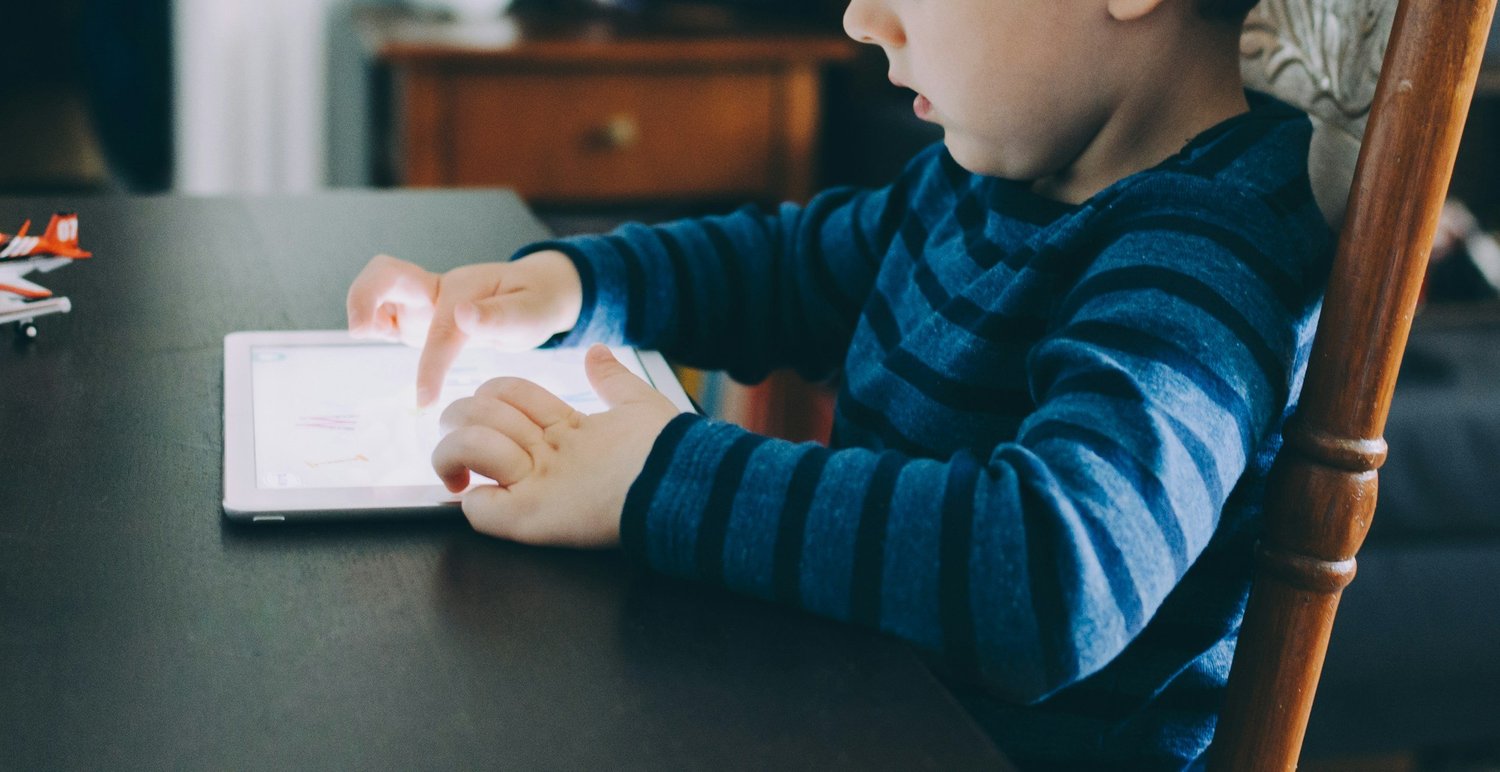
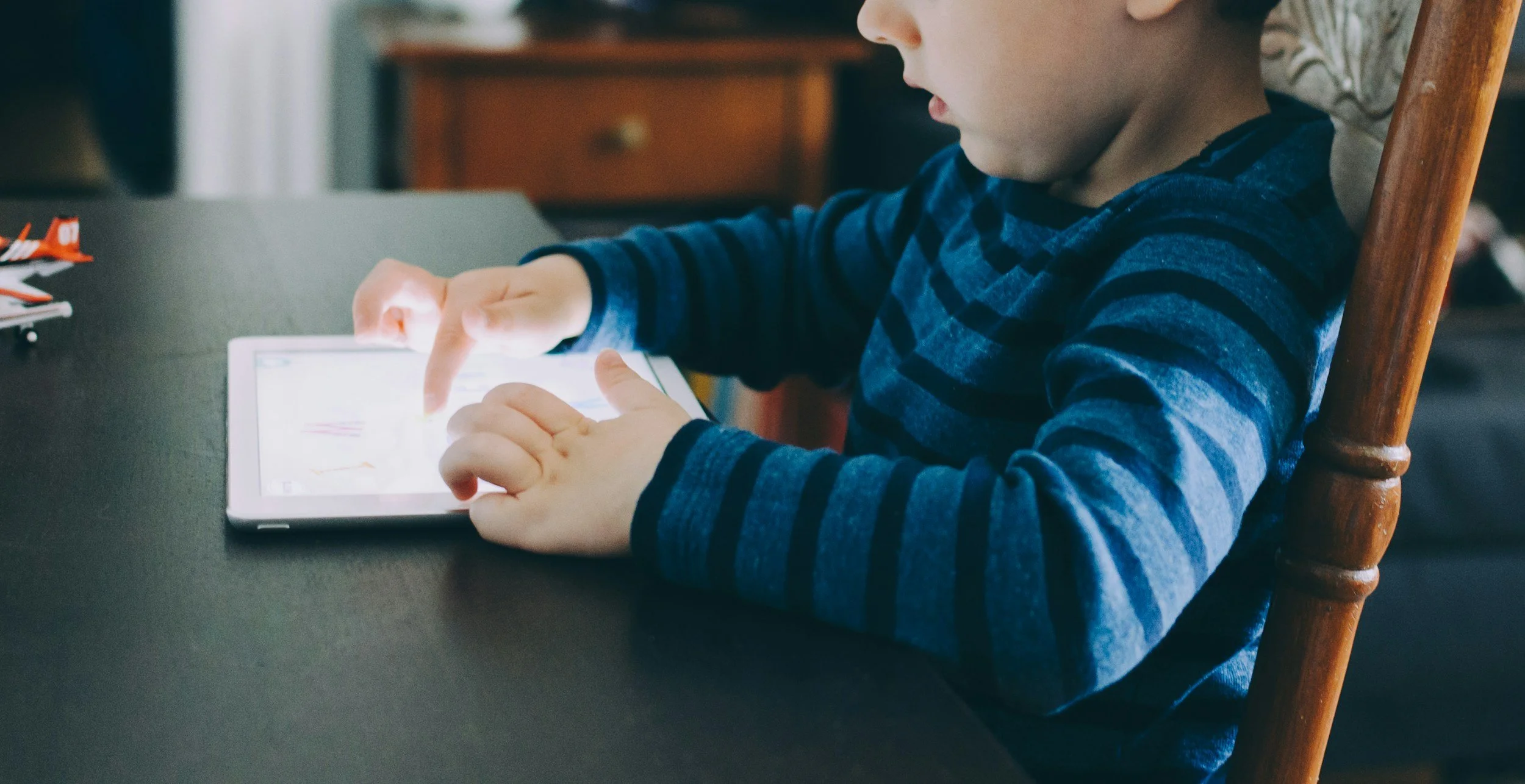
Screen time is any time a child spends looking at a phone, tablet, television or computer, and the concern for young children is not the screen itself but what it replaces — conversation, movement and unstructured play, which are the raw materials of early development. Current international guidance suggests avoiding screens almost entirely before age two and keeping to around an hour a day between ages two and five, with an adult watching alongside where possible. If your child's speech, attention or behaviour already worries you, a developmental assessment is a better first step than simply cutting screens. Speech therapy and wider developmental support are available at Bloom Beyond Enabling in Al Jaddaf, Dubai.
Few subjects generate as much quiet guilt among Dubai parents as screens. Long summer months indoors, school runs across the city, siblings to manage and a tablet that reliably buys twenty minutes of peace — the habit builds without anyone deciding on it. Then a nursery teacher mentions that your three-year-old is not talking much, or that they struggle to sit for a group activity, and the tablet becomes the obvious suspect. The reality is more nuanced, and more useful to know.
The World Health Organization recommends no sedentary screen time at all for children under two, and no more than one hour a day for children aged two to four — with less always being better. Paediatric bodies broadly agree, generally suggesting that children under about eighteen months use screens only for video calls with family, and that two- to five-year-olds are limited to roughly an hour of high-quality content a day, ideally watched with an adult.
These are population-level recommendations rather than diagnostic thresholds. A child who watches ninety minutes on a difficult day has not been harmed. The figures matter as a direction of travel, not as a line that triggers alarm when crossed.
Language is learned through back-and-forth interaction, not through exposure to words. A child says something, an adult responds, expands on it and waits — and that exchange is what builds vocabulary and sentence structure. Screens rarely provide this. Even excellent educational content talks at a child rather than with them, and a tablet cannot notice when a child points at something and name it for them.
The concern is therefore displacement. Two hours of passive watching is two hours not spent in conversation, and across weeks and months those missed exchanges add up. Where a child is already a late talker, heavy screen use can slow the very interactions they most need. If your child is not meeting language milestones, an assessment with a speech and language therapist will identify whether there is an underlying difficulty rather than leaving you to guess.
Young children build their bodies through climbing, carrying, spinning, pushing and balancing. This physical input develops core strength, coordination and the sense of where the body sits in space — all of which underpin sitting still at a desk, holding a pencil and coping with a busy classroom.
In Dubai, where outdoor play is genuinely limited for several months of the year, screens easily fill that gap. Children who move less often find it harder to regulate themselves, which parents experience as fidgeting, clumsiness or difficulty settling. An occupational therapist can assess whether a child's restlessness reflects a sensory or motor difficulty, or simply a need for more movement built into the day.
Fast-paced content delivers constant novelty and reward with no effort required. Ordinary life — waiting, sharing, losing a game, tolerating boredom — asks far more, and children who spend a great deal of time in the first world can find the second one harder to bear. This is why turning a screen off so often produces a meltdown out of proportion to the event.
Boredom is not a problem to be solved. It is the state from which imaginative play, problem-solving and self-direction emerge. Where a child's emotional responses are consistently intense or unmanageable across settings, a clinical psychology assessment can distinguish a screen-related habit from an underlying anxiety or regulation difficulty.
Removing screens abruptly rarely works and usually escalates conflict. Structure tends to be more effective than restriction.
Anchor screen time to a predictable slot rather than negotiating it repeatedly, and give a warning before the end so the transition is expected. Keep meals, the car for short journeys and the hour before bed screen-free — blue light and stimulating content both delay sleep. Watch together where you can, pausing to ask questions and name what is happening, which turns passive viewing into a language opportunity. Prioritise physical play indoors when the heat makes outdoor time impractical: cushion obstacle courses, dancing, carrying laundry baskets and climbing at an indoor play centre all count. Finally, notice your own phone use, since children calibrate to what they see rather than what they are told.
How much screen time is appropriate for my child?
Broadly none before age two, and around an hour a day of high-quality content between two and five. Treat these as a direction rather than a strict limit, and prioritise what the screen is displacing over the exact number of minutes.
Do screens cause speech delay?
Not directly. Screens do not damage language development, but heavy use displaces the back-and-forth conversation that builds it, which can slow progress — particularly in a child who is already finding language difficult.
Is educational content better than cartoons?
Yes, modestly. Slower-paced, well-designed content is preferable to fast-cutting entertainment, but no programme matches a real conversation with an adult, and co-viewing improves the value of either.
My child melts down whenever I turn the screen off. Is that normal?
Yes, this is very common. Screens are highly stimulating and the drop afterwards feels abrupt, so predictable timing and a clear warning before the end usually reduce the reaction considerably.
Should I be concerned if my child prefers screens to play?
A preference is normal; a persistent inability to play without one is worth attention. If your child cannot occupy themselves, resists all other activity, or is also behind on speech or social milestones, seek an assessment.
Where can my child get a developmental assessment in Dubai?
Developmental, speech and psychological assessments are available at Bloom Beyond Enabling, located at 601, 602 & 701 Al Nastaran Tower, Al Jaddaf Waterfront, Dubai. The centre supports children from early years through school age.
Screens are one factor among many, and they are rarely the whole story. If your child's speech, movement, attention or emotional responses concern you, the useful question is not how many minutes they watched but whether their development is on track. Our team provides speech therapy, occupational therapy and clinical psychology for children across Dubai and the wider UAE.
To arrange an assessment, call +971 4 554 5234 or +971 52 600 4107, or email bloom@bloombeyond.me. You can find us at 601, 602 & 701 Al Nastaran Tower, Al Jaddaf Waterfront, Dubai.



.png)

.png)

.png)
.png)
.png)
.png)